
Steps, Stoops and Landings
Front stoops and garden steps — rebuilt with deep footings so they don't lift away from the house every winter.
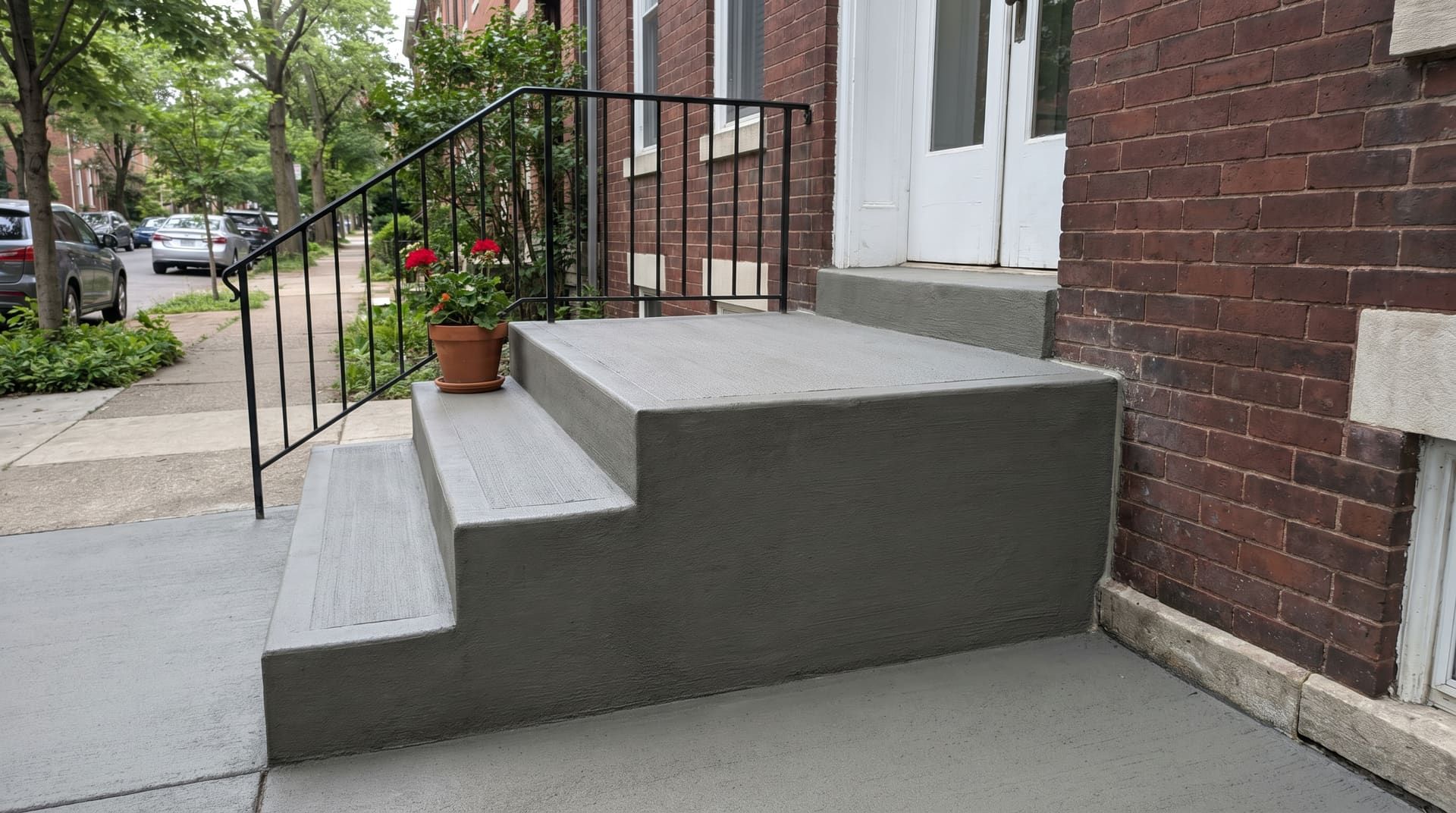
[ Recent project / Steps, Stoops and Landings ]
Lower Montco, PA
[ Why It Matters ]
That gap that opens up between your front step and your house every spring? It's frost. Most older stoops in Bridgeport, Norristown, and Conshohocken were built without footings deep enough to get below where the ground freezes. So every winter the step lifts, and every spring it doesn't quite settle back the same way. You can't patch that. The fix is rebuilding the step on footings that go three feet down — below where Pennsylvania frost can reach them.
[ Recent work / Two from the file ]
A different home. The same approach.
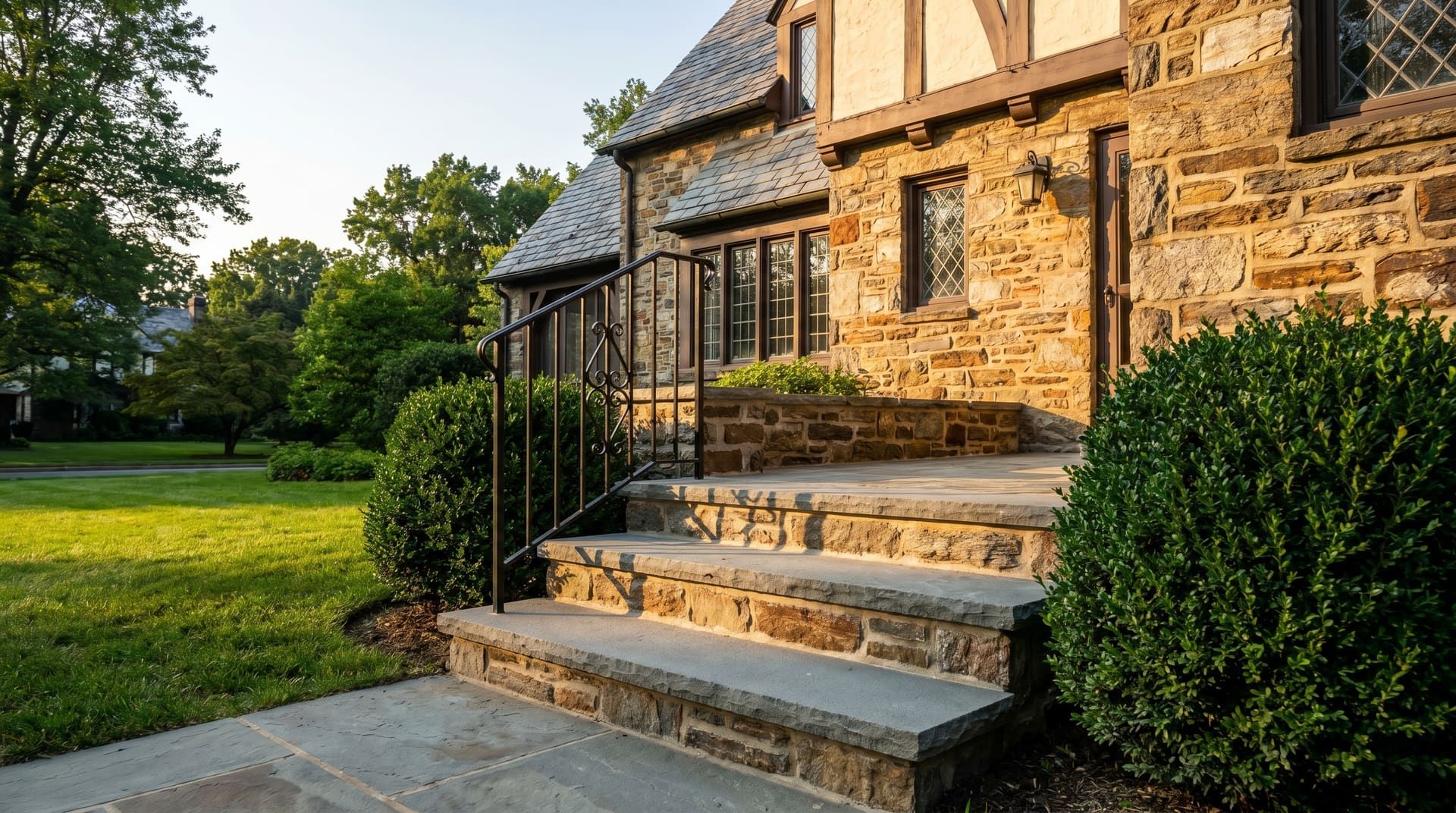
P.01 · Recent project
Steps,
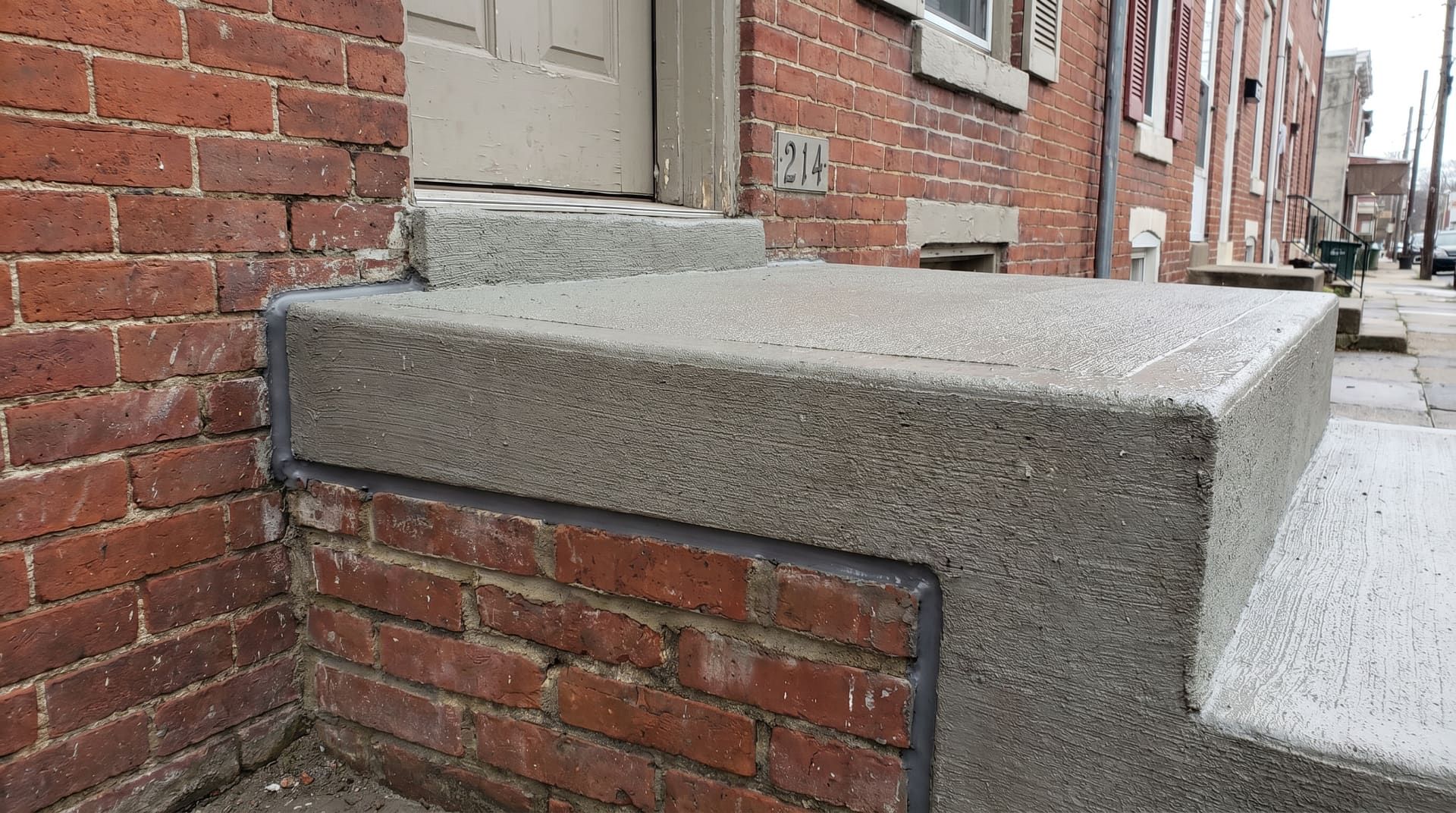
P.02 · Craft detail
Steps,
[ Mid-pour · Layered Build-up ]
Build-up · Steps, Stoops and Landings.
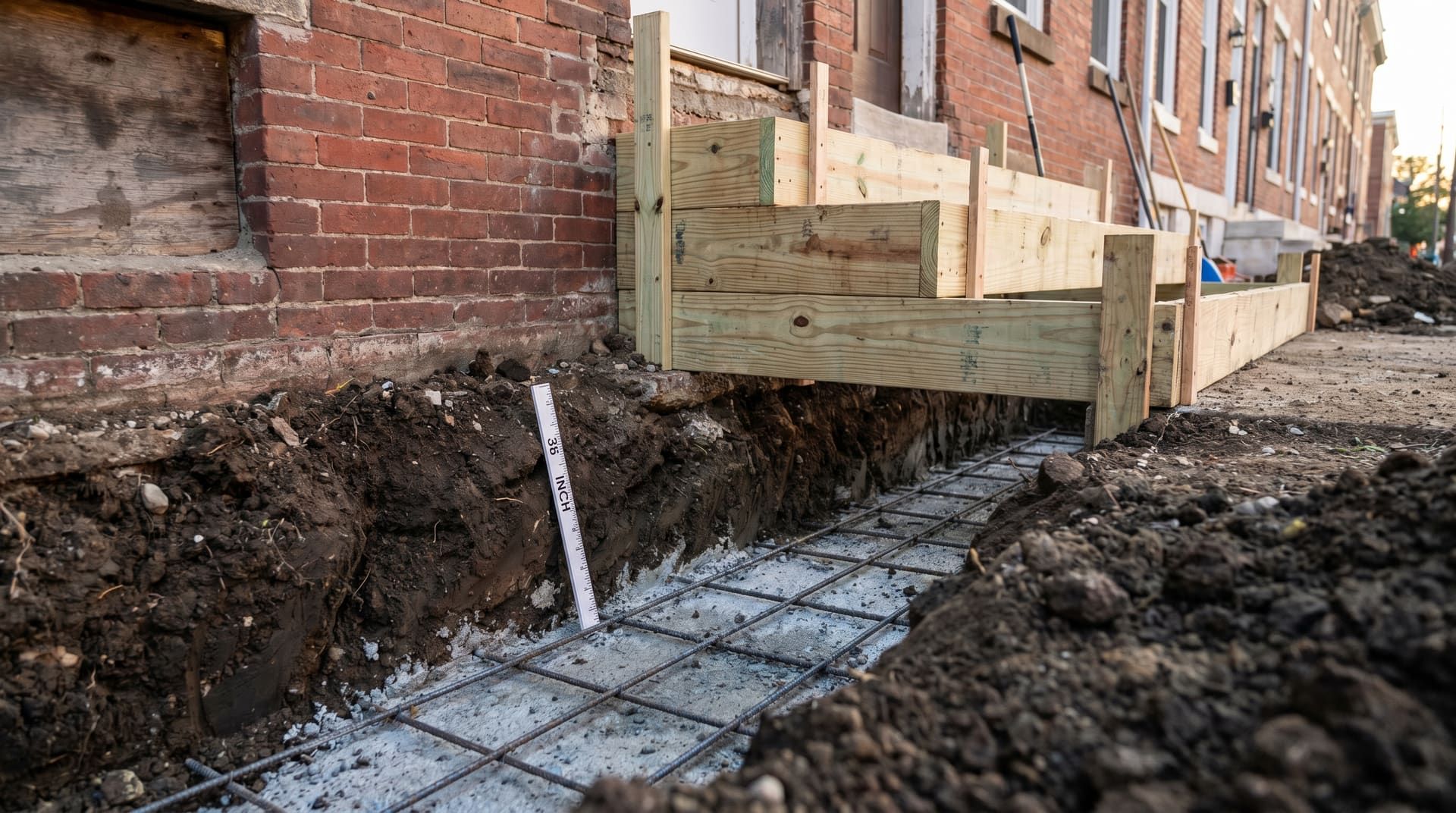 1 2 3 4 5 6
- 1
Footing depth
36 in. deep
Below the frost line — can't heave in winter
- 2
Footing concrete
8 in.
Anchors the whole stoop to one solid base
- 3
Step rise
7 in. max
Per Pennsylvania building code
- 4
Step depth
11 in. min
Per Pennsylvania building code
- 5
Step-edge overhang
3/4 in.
So you can see the step edge from above
- 6
Flexible seam at house
Lets stoop and house move independently
"Footings three feet down — below where the ground freezes. Steps tall enough and deep enough to walk safely. That's not optional, it's the building code."
[ Field Note / Steps ]
[ Pricing / Per Set ]
Investment range for steps, stoops and landings.
Concrete steps (3-step set)
$1800 – $3200 set
Stone-clad steps
$3500 – $6500 set
Stoop with landing
$2500 – $5500 set
Every quote is line-itemed — base, concrete, forms, finish, and removal listed separately.
[ Specification Sheet ]
Build spec.
S.01
Footing depth (below frost)
36 in. deep — below frost, can't heave in winter
S.02
Footing width
12 in. minimum, wider for heavier loads
S.03
Concrete mix
4,000 psi freeze-resistant mix — won't flake in winter
S.04
Step height (riser)
6–7.75 in. — per residential building code
S.05
Step depth (tread)
11 in. minimum — your foot fits on the step
S.06
Landing size at the door
36×36 in. minimum — so the door can swing open
S.07
Flex seam at the house
Foam + sealant — stoop and house move independently
S.08
When a handrail is required
4 or more steps — per building code
[ Frequently Asked ]
Common questions about steps, stoops and landings.
Q.01
Why does my concrete stoop keep pulling away from the house every winter?
A stoop that lifts every winter and settles back unevenly every spring was built without footings deep enough to get below where the ground freezes. When soil freezes, water in it expands and pushes everything above upward — that's frost heave. A stoop on shallow or no footings rides with the frost. The house foundation, which sits in soil well below the freeze depth, doesn't move. The gap that opens between them is the difference between what froze and what didn't. The only permanent fix is to rebuild the stoop on footings that go 36 inches below grade — below the PA frost line — so the structure is anchored in soil that stays unfrozen all winter.
Q.02
Do front steps require a permit in Montgomery County boroughs?
Generally, replacing existing steps at the same location and size does not require a permit in most Montco jurisdictions. However, new stoop structures, structural changes to entry landings, and any work that adds a covered entry or changes the grade significantly may require a building permit. In Bridgeport Borough and Norristown, contractors must be registered with the municipality before performing any work, regardless of whether a permit is required. NextGen Masonry is registered in all served municipalities and verifies permit requirements for each specific scope during the estimate.
Q.03
Can you match new steps to existing bluestone on my Lower Merion home?
Yes. For properties in Lower Merion, Bryn Mawr, and Gladwyne where the existing hardscape uses Pennsylvania bluestone, the crew can set bluestone treads on a new concrete base and form risers to match the existing step dimensions. We source bluestone from regional suppliers and can match smooth, sawn-edge, or natural-cleft finishes. The concrete base beneath the bluestone is built to the same footing depth and freeze-resistant mix as any other NextGen step — the stone is the surface, not the structure.
Q.04
How wide should a front stoop landing be?
The minimum landing size at a residential entry threshold is 36 inches wide by 36 inches deep per code — this allows a door to swing open without requiring a person to step backward off the landing. For practical comfort, a 48×48 inch landing or larger is preferable, particularly if the door swings outward. NextGen Masonry reviews the door swing and threshold condition on the estimate site visit and sizes the landing accordingly. Narrow landings that do not accommodate the door swing are a frequent problem on older stoops that were not built to current standards.
Q.05
What is the lifespan of a new concrete stoop in Pennsylvania?
A correctly built concrete stoop — footings below the frost line, 4,000 psi freeze-resistant mix, code-compliant step heights and depths, and a flexible seam where the stoop meets the house — should last 30 to 50 years in PA winters with very little maintenance. The two common failure modes for new stoops are deicing salt damage to the surface (use sand instead of salt for the first two winters, then limit salt use after that) and the flexible seam at the house drying out (reseal it every 5–7 years to keep water from getting behind the stoop). Stoops that fail early almost always lack proper footings or were poured in standard (non-freeze-resistant) concrete.
[ Coverage / Lower Montco ]