
Hardscape for the Main Line Standard.
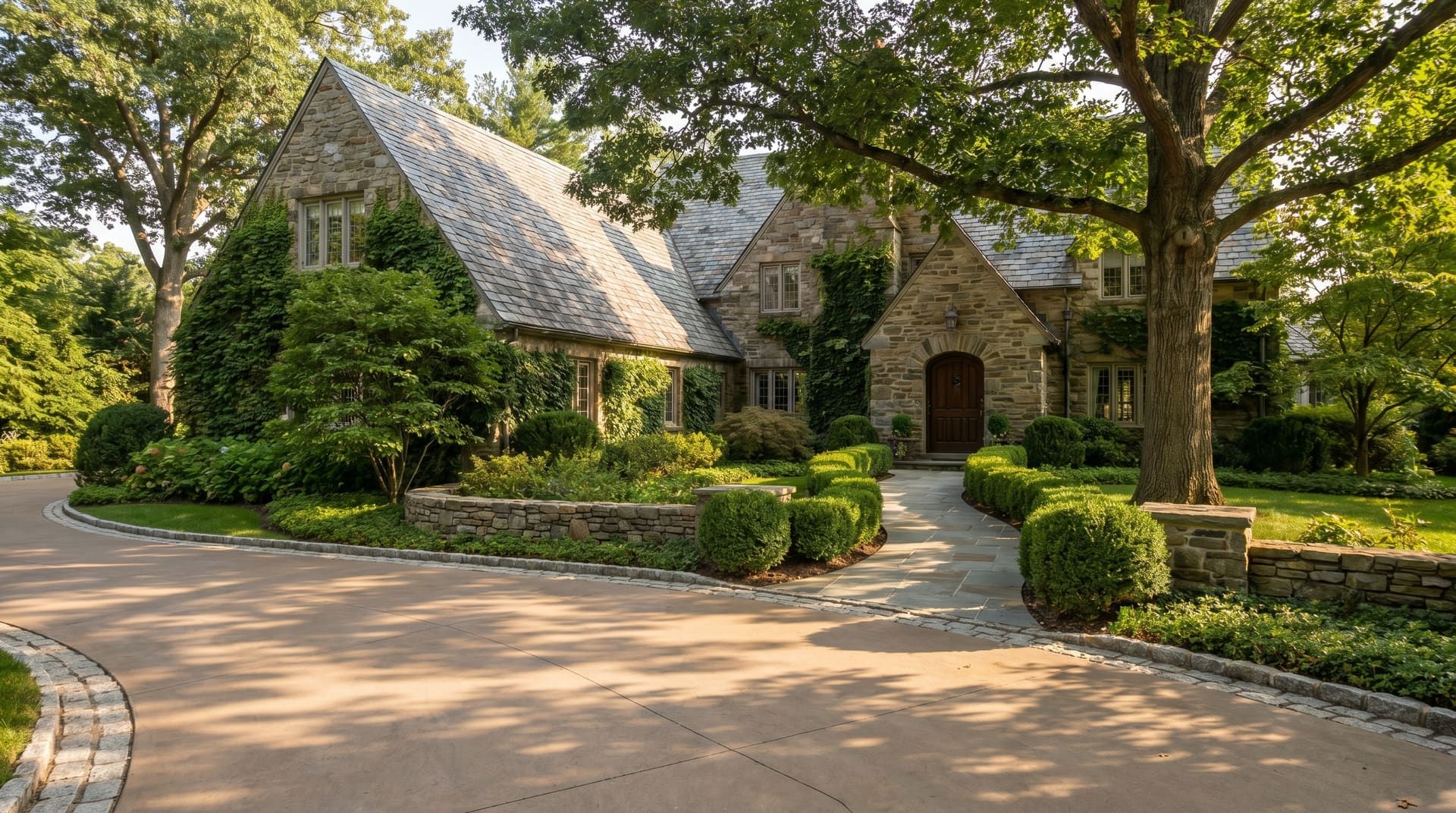
On the Main Line, what shows from the street has to match what the house already is — usually bluestone or stone. And on historic properties, the township has to sign off on the look. We work with both. Stone colonials, Tudor Revival estates, and long curved driveways in Ardmore, Bryn Mawr, Gladwyne, and Penn Valley.
[ Recent project / Lower Merion, PA ]
NextGen Masonry
[ Lower Merion / Vital Stats ]
Population
Land Area
Median Build
Freeze-Thaw
[ Why Lower Merion ]
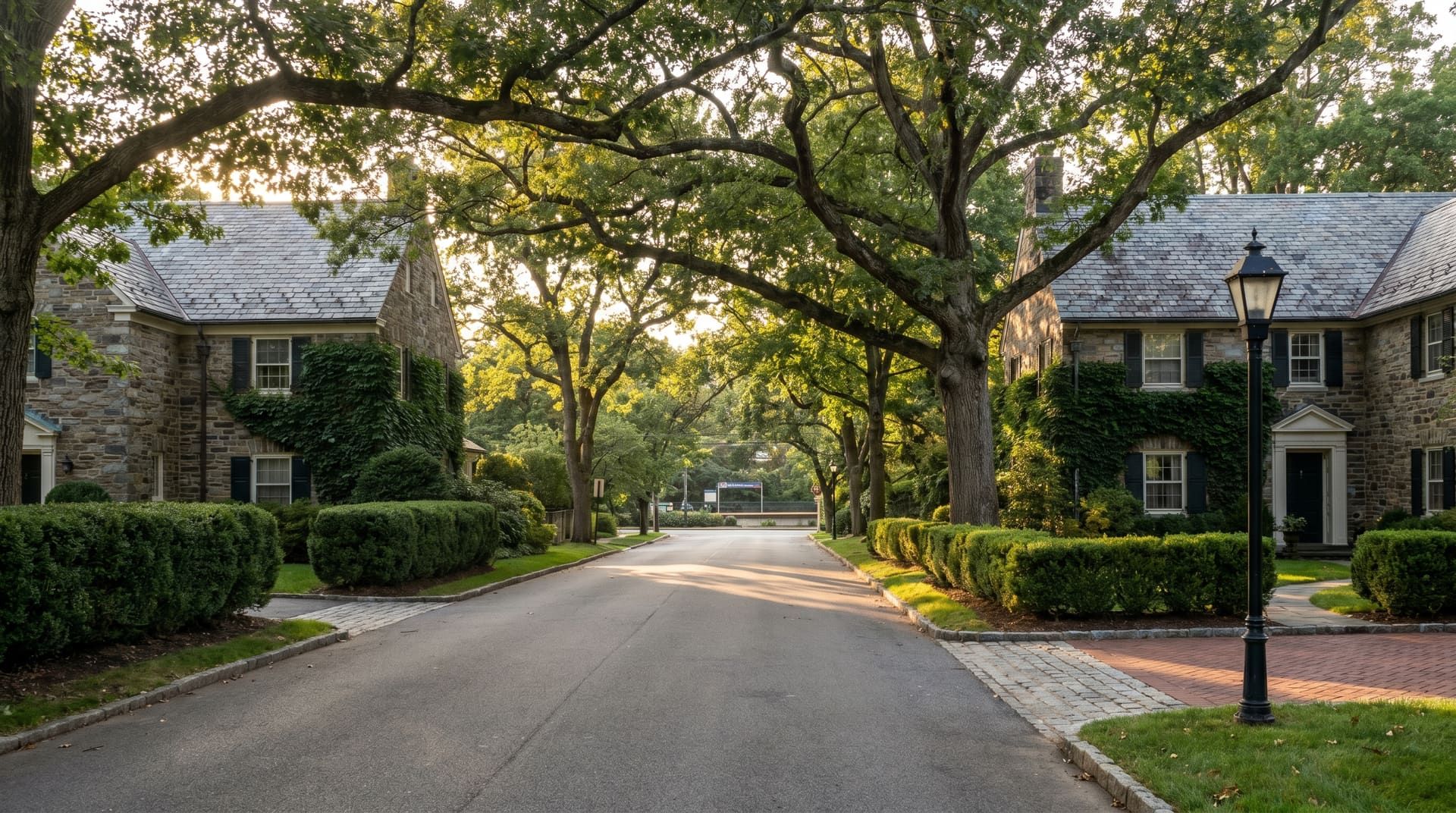
Lower Merion Township is one of the most affluent municipalities in Pennsylvania, with a median household income of $148,721 and a median home value approaching $900,000. The township's dominant construction era is early 20th century — stone colonials, Tudor Revival homes, and Victorian-era residences in Ardmore, Bryn Mawr, Wynnewood, Narberth, and Gladwyne that set a material standard for the surrounding hardscape. Pennsylvania bluestone, fieldstone, and Pennsylvania granite are the vocabulary of historic Lower Merion. Any hardscape work on these properties must complement that vocabulary.
NextGen Masonry works in Lower Merion with full awareness of both the material expectations and the regulatory requirements unique to the township. Lower Merion requires building permits for most hardscape work. Projects that add 1,000 to 1,500 sq ft of new hard surface need a Minor Grading Permit; projects over 1,500 sq ft need an engineer-designed plan for where rainwater will go, plus a stormwater management system. These are real thresholds — a long curved driveway replacement on a Gladwyne estate lot can easily cross 1,500 sq ft.
The Township's Historical Commission and Historical Architectural Review Board (HARB) review exterior work on properties listed on the Historic Resource Inventory. Hardscape visible from the street on a historic property may need HARB review to confirm the materials match the historic look of the property. So the material choice for a front walk or driveway on a historic Lower Merion property isn't purely aesthetic — it needs to pass HARB's review. NextGen Masonry advises on material selection in the context of HARB requirements and can coordinate with the township's review process.
Estate lots in Gladwyne and Penn Valley are where NextGen's retaining wall work in Lower Merion is most active. Grade changes on multi-acre properties can be significant — a 6-to-10-foot drop from driveway level to lawn level isn't unusual on hillside lots along the Gladwyne ridge. Stackable block retaining wall systems at these heights require a permit, stamped engineering drawings, and careful drainage design. NextGen handles permit coordination and works with structural engineers on walls that exceed the manufacturer's standard sizing tables.
Freeze-thaw is the main cause of concrete failure in Lower Merion as in all of lower Montgomery County — 20 to 30 cycles per winter, with water seeping into concrete and stone, expanding when it freezes, and causing surface flaking, scaling, and joint failure. Freeze-resistant concrete mixes are mandatory at NextGen on all flatwork. Long, curved driveways on estate properties present an additional challenge: a 150-foot driveway carries more concrete mass and has more places for water to go than a 40-foot suburban driveway. Crack-control cut placement, drainage crown, and flexible-seam placement at grade changes are each planned on the estimate visit.
SEPTA Regional Rail stops at Ardmore, Wynnewood, Narberth, and Bryn Mawr drive high foot traffic on front walks and entry stoops at those stations' immediate neighborhoods. Front path quality and stoop condition are more visible in walkable station areas — NextGen builds these to the same specification as any other project, but the public-facing nature of the work means finish quality and site cleanup standards are especially important.
[ On the ground in Lower Merion ]
[ Streets we work · Lower Merion, PA ]
"On the Main Line, what shows from the street has to match what the house already is — usually bluestone. We work with that and with the township's historic review."
[ Field Note / Lower Merion ]
[ Climate Panel / Freeze-Thaw History ]
Why we use a freeze-resistant concrete mix.
Greater Philadelphia averages 25 freeze-thaw cycles per winter. Each cycle drives water into tiny pores in the concrete, where it freezes and expands ~9%. Without 5–7% entrained air, that pressure flakes the surface apart within 5 years. (Severe freeze-thaw zone per building code: ACI F2.)
Philadelphia · cycles per winter
10-yr avg · 25
Freeze-thaw zone
Severe (F2 → F3)
Building-code rating for our climate
Concrete strength
4,500 → 5,000 psi
Higher PSI = denser, more crack-resistant
Entrained air
5–7%
Tiny air pockets act like shock absorbers
[ Common scopes in Lower Merion ]
What we typically pour here.
[ Neighborhoods served ]
10 neighborhoods.
- ·Ardmore
- ·Bryn Mawr
- ·Wynnewood
- ·Narberth
- ·Gladwyne
- ·Bala Cynwyd
- ·Merion Station
- ·Penn Valley
- ·Villanova
- ·Haverford
Lower Merion FAQ
Common questions about concrete in Lower Merion.
Q.01
Does NextGen Masonry work on Main Line properties in Bryn Mawr and Gladwyne?
Yes. NextGen Masonry serves Lower Merion Township, including Ardmore, Bryn Mawr, Wynnewood, Gladwyne, Bala Cynwyd, Penn Valley, and surrounding Main Line communities. We understand Lower Merion's permit requirements — including Minor Grading Permits when you add a certain amount of new hard-surface area, and Historical Architectural Review Board (HARB) review for historic properties — and we work with the material standards that Main Line stone colonials and Tudor Revival homes set for their hardscape.
Q.02
What is HARB and does my Lower Merion hardscape project need HARB review?
HARB is Lower Merion Township's Historical Architectural Review Board. It reviews exterior changes to properties listed on the Township's Historic Resource Inventory. If your property is on that inventory and the proposed hardscape is visible from the street — a front walk, driveway, or front stoop — the material choice and design may require HARB review to confirm the materials match the historic character of the home. NextGen Masonry can advise on whether your property and project scope trigger HARB review, and can coordinate with the township's review process. The practical answer: if you have a stone colonial on a public street in Bryn Mawr or Ardmore, ask the question before finalizing the material selection.
Q.03
Can NextGen match existing Pennsylvania bluestone on my Lower Merion property?
Yes. For front walks, entry steps, and patio surfaces in Lower Merion where existing bluestone sets the material standard, NextGen can source and install Pennsylvania bluestone treads, stair faces, and field stone on a properly built concrete base. We work with regional stone suppliers who carry smooth, sawn-edge, and natural-cleft bluestone finishes. The concrete base beneath the stone is built to the same standard as any other NextGen job — deep compacted stone base, freeze-resistant mix, and proper drainage — the stone is the surface material over a correctly prepared structure.
Q.04
What permits does Lower Merion Township require for a driveway replacement?
In Lower Merion, replacing a driveway at the same footprint typically requires contractor registration and a building permit. If the replacement adds new hard-surface area — even modest widening — a Minor Grading Permit is required for additions between 1,000 and 1,500 sq ft of new hard surface, and an engineer-stamped stormwater management plan is required for additions above 1,500 sq ft. Long driveways on estate lots can easily cross those thresholds. NextGen Masonry is registered with the Lower Merion Building and Planning Department and handles permit research for every project address.
Q.05
How should I handle a failing driveway on a large Gladwyne estate lot?
Estate driveways in Gladwyne and Penn Valley — often 100 to 200 feet long with grade changes, curves, and turnaround areas — are complex projects. Matthew walks every estate driveway estimate personally to assess: existing slab condition and thickness, the soil underneath, drainage at grade changes, and whether any sections can be preserved versus requiring full replacement. Large-area driveways cross the Minor Grading Permit threshold in Lower Merion, and may require an engineer-stamped stormwater plan if they add significant new hard-surface area. NextGen coordinates the permit process and advises on phasing if the project scope warrants it.