
Driveways
Concrete driveway tear-out and replacement, expansions, and decorative driveways for lower Montgomery County homes — built 5 in. thick on compacted stone.
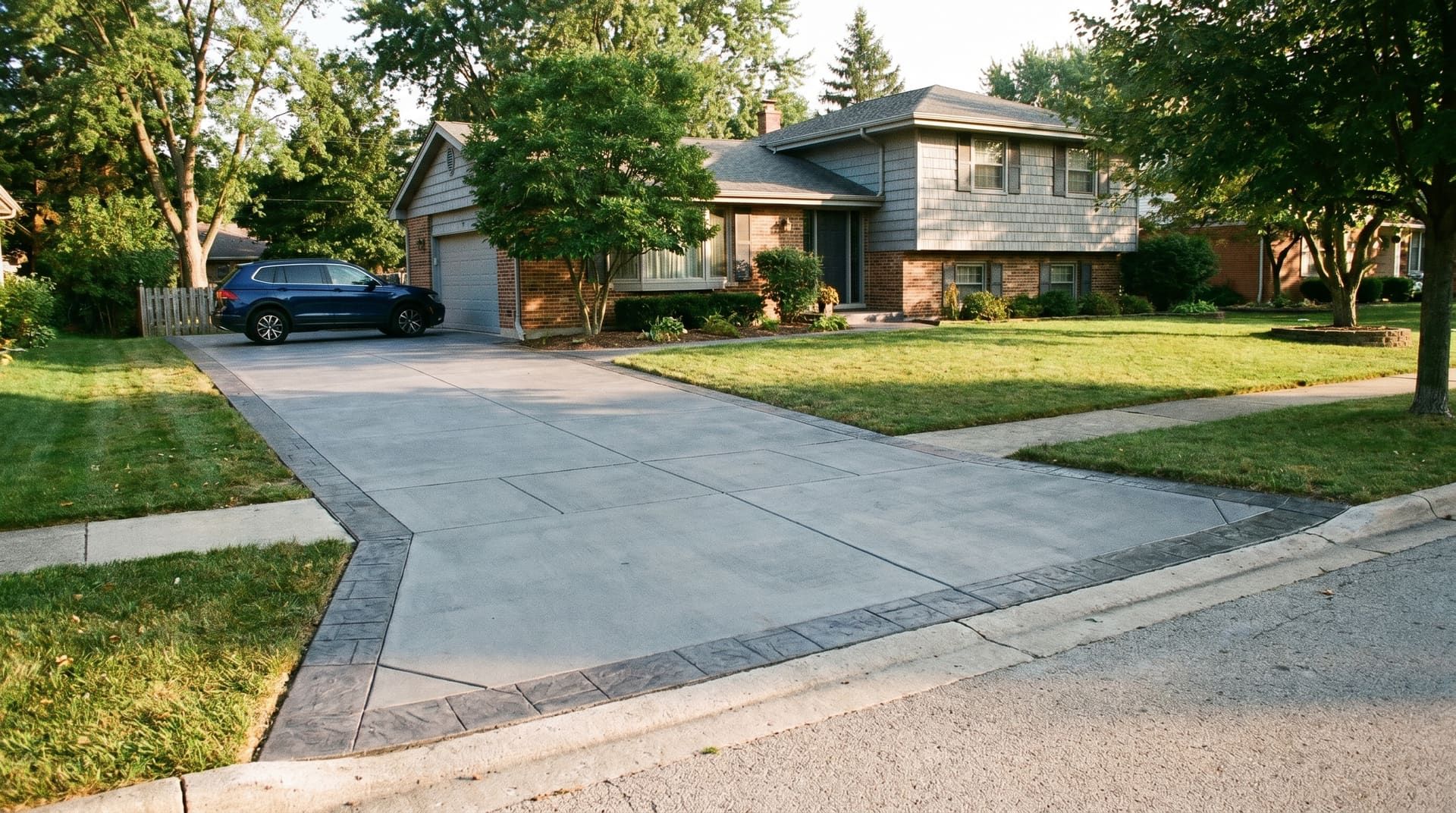
[ Recent project / Driveways ]
Lower Montco, PA
[ Why It Matters ]
A driveway has to do something a patio doesn't: hold up cars. Every time you pull in, the slab takes a few thousand pounds across four small tire patches. Multiply that by the number of times you and your family pull in over thirty years, add Pennsylvania winters and rock salt, and a thin slab on a thin base eventually loses. The fix isn't fancy — it's a thicker concrete pour on a deeper, well-packed stone base, with steel reinforcement inside it.
[ Recent work / Two from the file ]
A different home. The same approach.
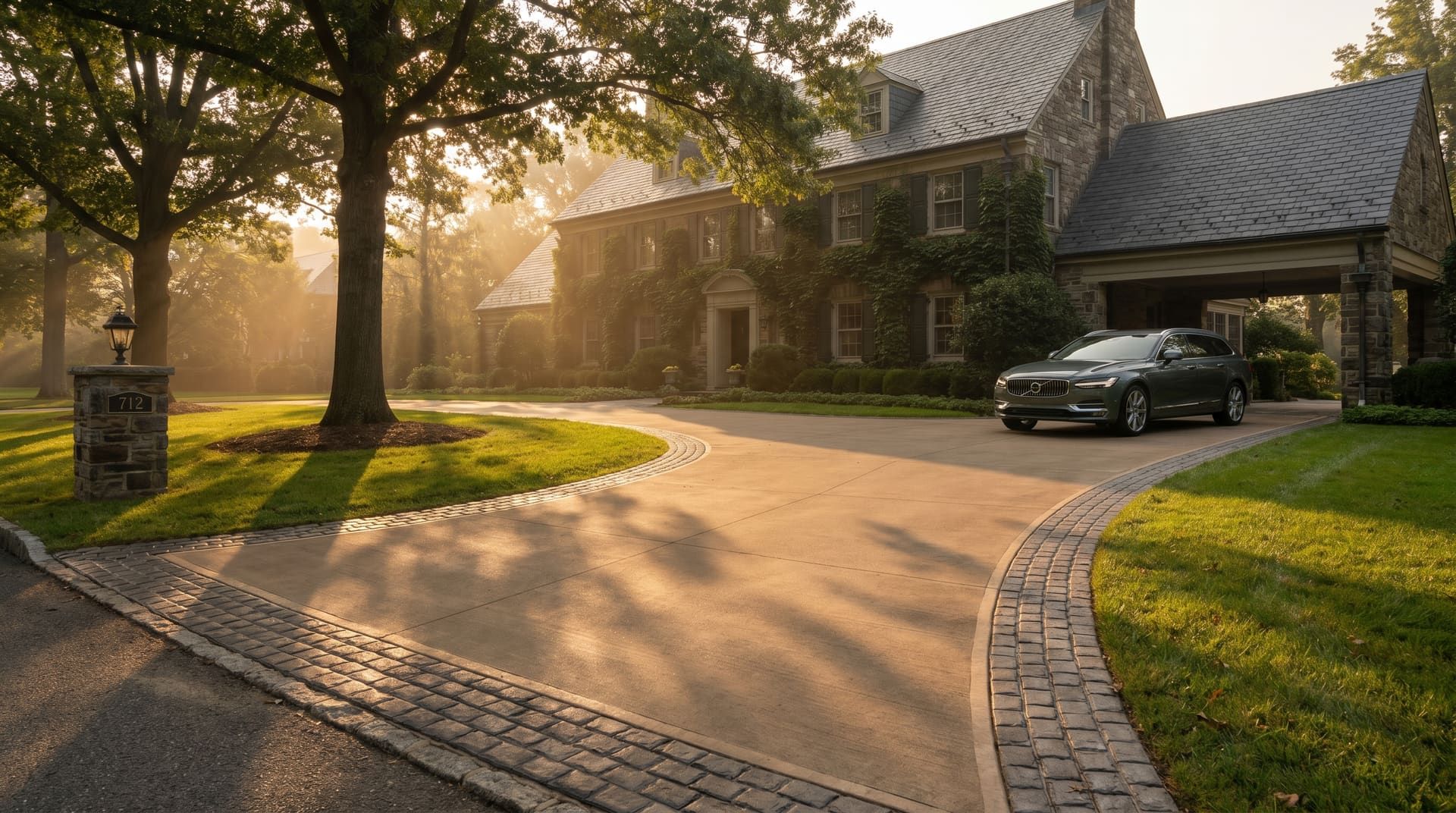
P.01 · Recent project
Driveways
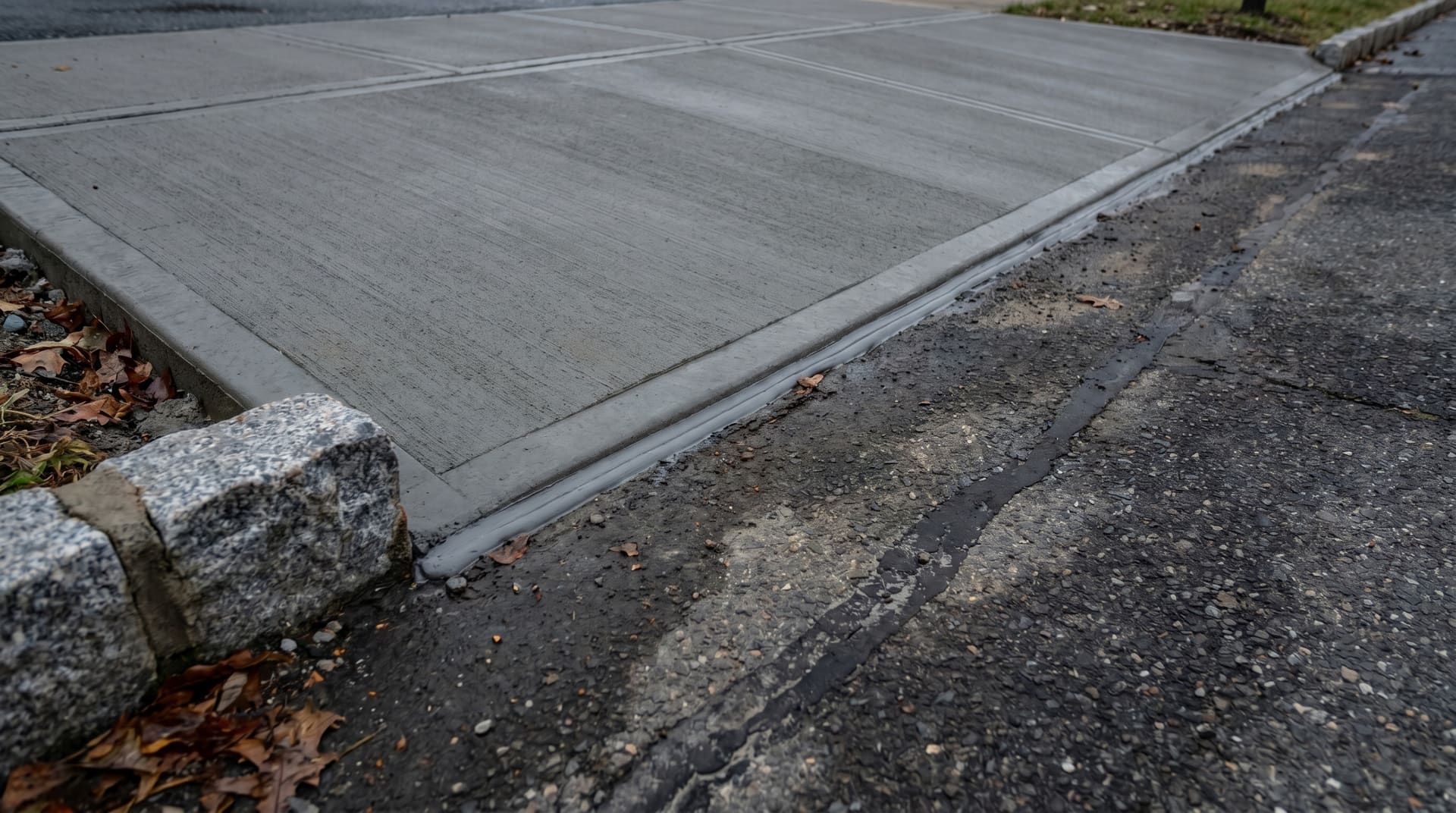
P.02 · Craft detail
Driveways
[ Mid-pour · Layered Build-up ]
Build-up · Driveways.
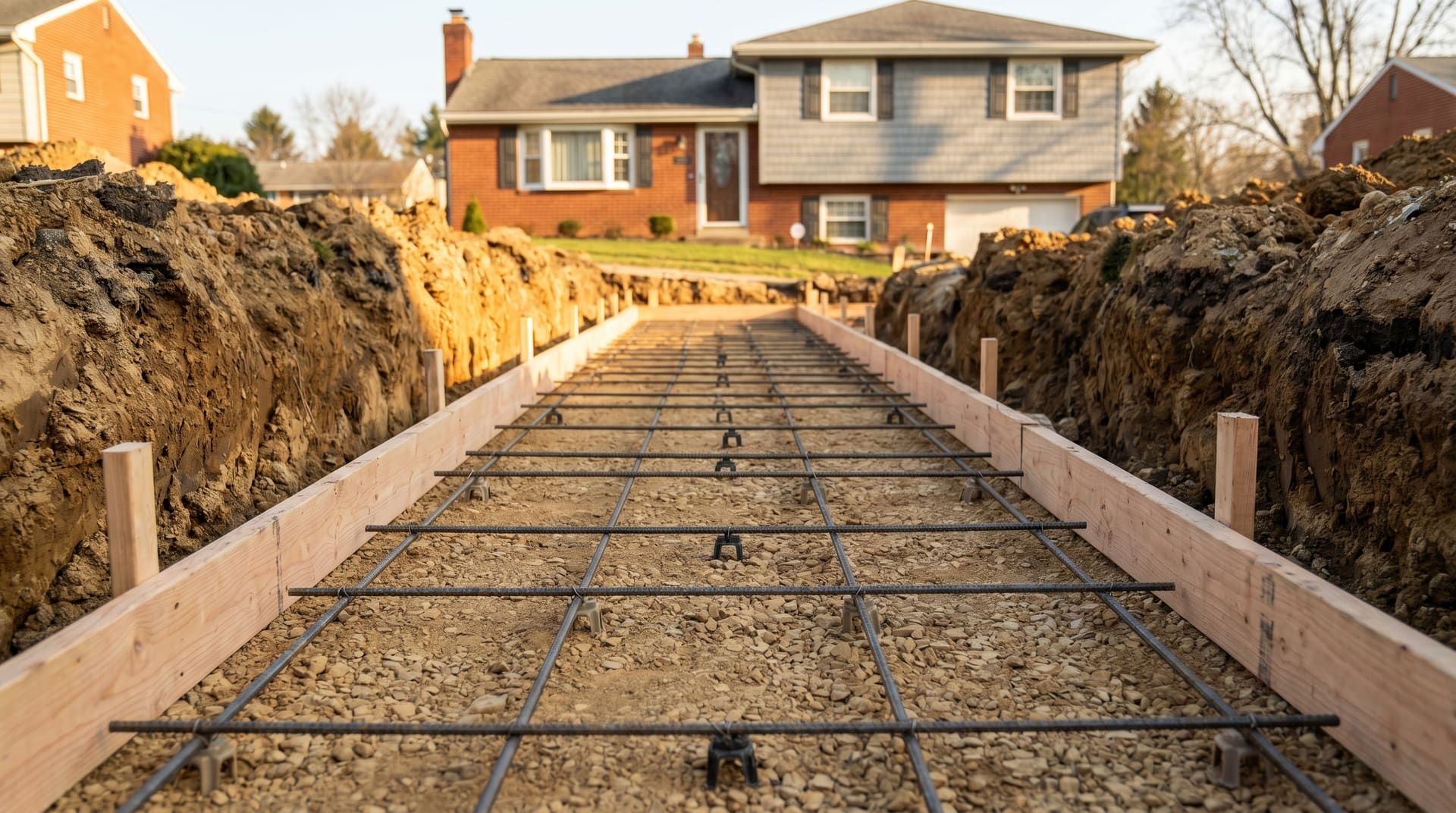 1 2 3 4 5 6
- 1
Compacted soil base
Packed firm before any stone goes down
- 2
Compacted stone base
6–8 in.
Distributes vehicle weight, drains water
- 3
Reinforcement
Rebar or wire grid — spreads vehicle loads
- 4
Concrete slab
5 in.
Sized for vehicle weight — thicker than a patio
- 5
Crack-control cuts
Every 10 ft — controls where it cracks
- 6
Street edge
Flexible seam where driveway meets the street
"Five inches of concrete. Eight inches of stone underneath. Crack lines on a planned grid. Skip any one and the driveway tells you in two winters."
[ Field Note / Driveways ]
[ Finish Library / 4 Options ]
Pick the surface. Spec carries through to all of them.
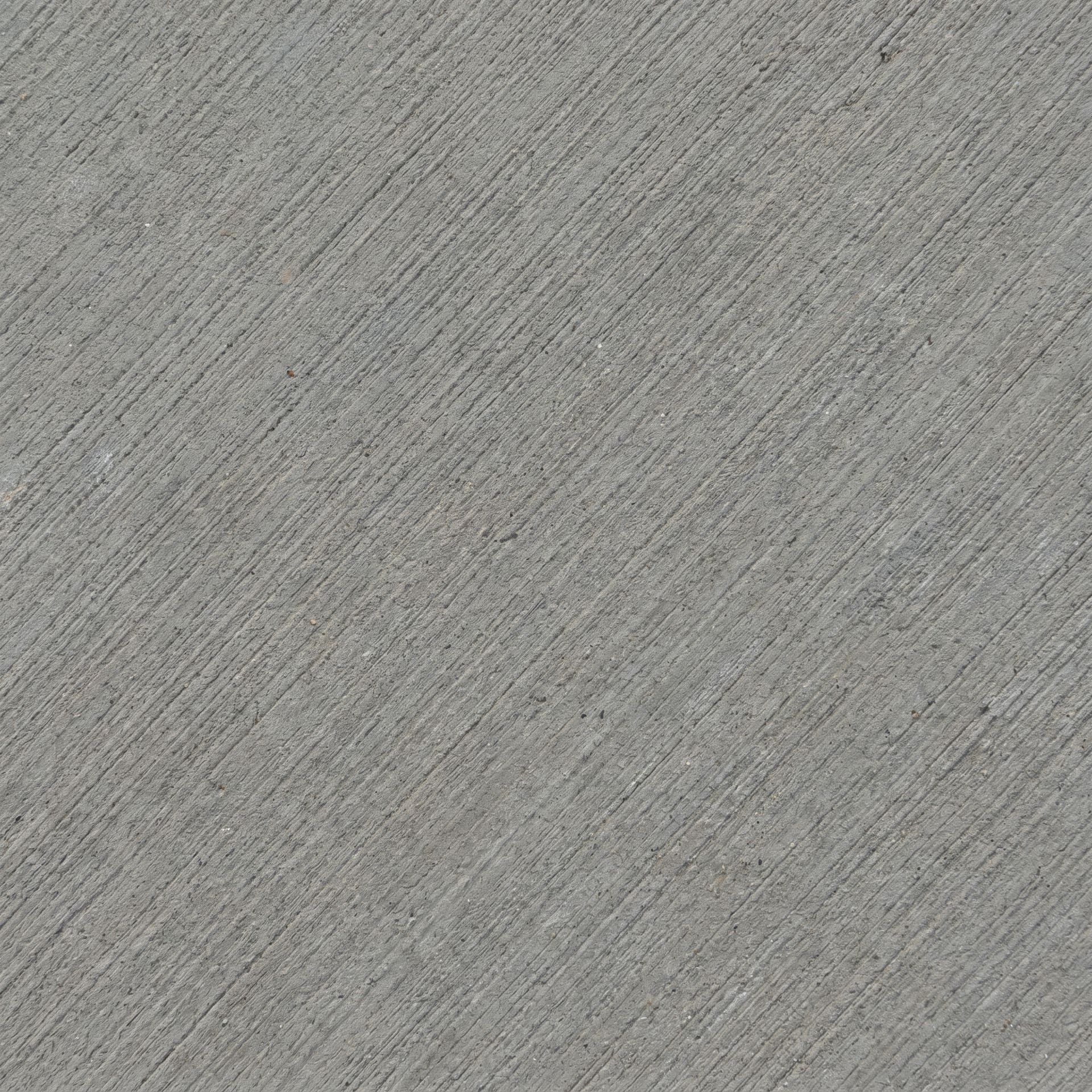 F.01
F.01Finish
Broom
Lowest maintenance for vehicle traffic
Standard residential
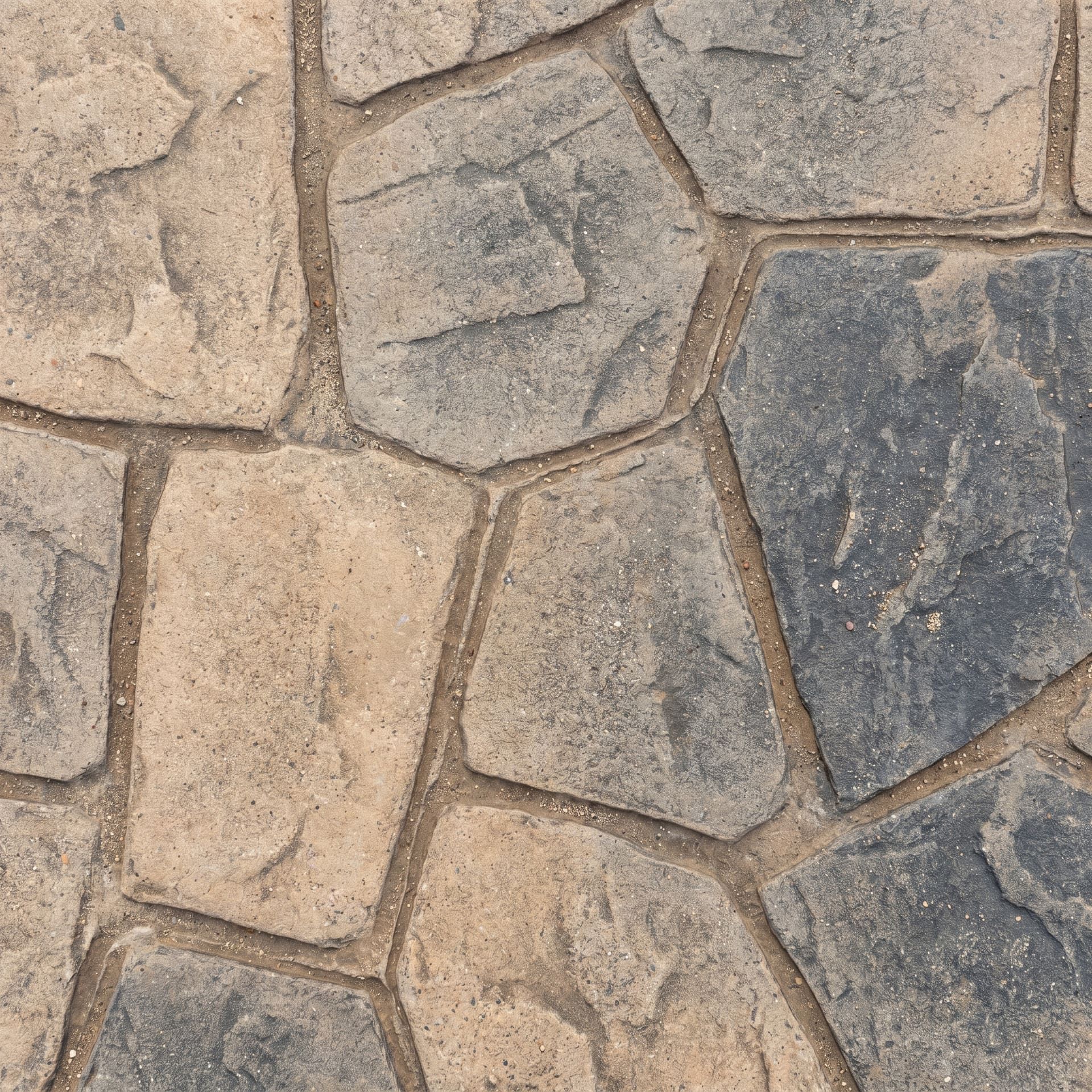 F.02
F.02Finish
Stamped Border
Spec-correct substrate required
Border accents only
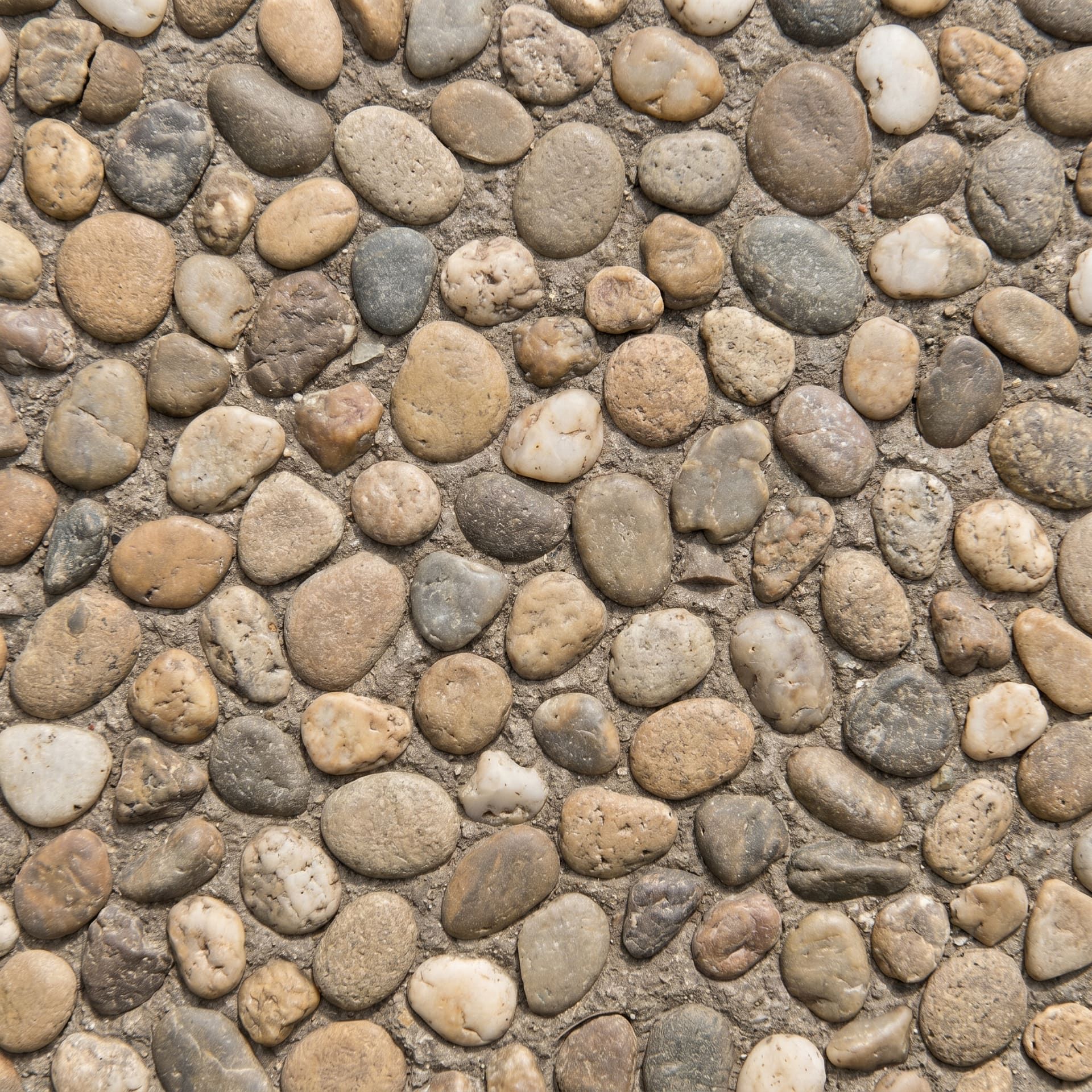 F.03
F.03Finish
Exposed Aggregate
Hides wear / no winter ice glaze
Premium look
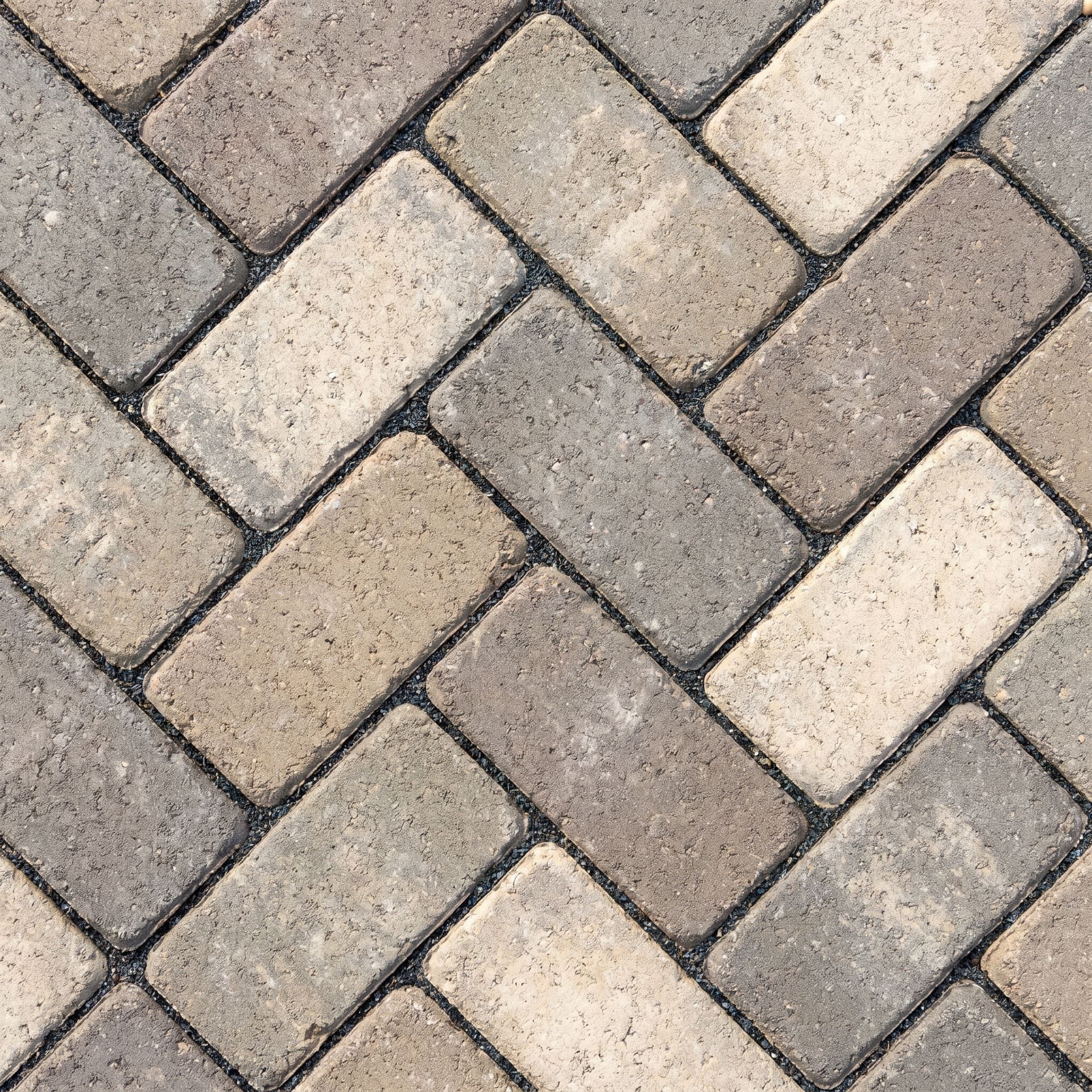 F.04
F.04Finish
Paver Driveway
Replaceable / serviceable over decades
Concrete pavers rated for vehicles
[ Pricing / Per Square Foot ]
Investment range for driveways.
Broom-finish replacement
$12 – $20 / sq ft
Stamped border accent
$16 – $28 / sq ft
Paver driveway
$22 – $40 / sq ft
Every quote is line-itemed — base, concrete, forms, finish, and removal listed separately.
[ Specification Sheet ]
Build spec.
S.01
Concrete thickness
5–6 in. — thick enough to hold cars and SUVs
S.02
Stone base depth
6 in. of compacted stone — distributes vehicle weight
S.03
Concrete mix
4,000 psi freeze-resistant mix — won't flake in winter
S.04
Steel reinforcement
1/2 in. rebar or wire grid — spreads vehicle loads
S.05
Crack-control lines
Every 10 ft, within 24 hrs of the pour
S.06
Flex seam at the street edge
Foam + sealant where driveway meets the street
S.07
Salt resistance
No calcium chloride deicers — they eat concrete
S.08
Curing time
No vehicle traffic for 7 days; full strength at 28
[ Frequently Asked ]
Common questions about driveways.
Q.01
How long does a concrete driveway last in Montgomery County?
A properly built concrete driveway — 5-inch slab, 6-inch compacted stone base, freeze-resistant mix, steel reinforcement, and crack-control cuts — typically lasts 30 to 40 years in the Pennsylvania climate with very little maintenance. The two main enemies are deicing salt (which eats away at the surface) and frost heave (winter freeze-thaw lifting an underbuilt slab). Sealing the surface every 2–3 years extends the life by keeping water out. Driveways that fail in 5–10 years almost always lack the base depth and freeze-resistant mix that survive Pennsylvania winters.
Q.02
Why is a concrete driveway thicker than a patio slab?
A car weighs a lot more than a person — and it concentrates that weight on four small tire patches. A standard passenger vehicle is 3,000–5,000 lbs; an SUV or delivery truck can exceed 8,000 lbs. Over thousands of trips in and out, a 4-inch patio slab will develop cracks under that repeated weight. A 5–6 inch driveway slab with steel reinforcement at mid-depth spreads the load and resists cracking. This isn't an upsell — it's the minimum thickness for a slab that has to hold up cars.
Q.03
Can I use rock salt to deice a concrete driveway?
Not in the first winter after installation, and sparingly after that. Rock salt (sodium chloride) and calcium chloride both seep into concrete pores, where they form salt crystals that grind the surface apart over winter freeze-thaw cycles. The damage is worst on new concrete that's still curing through its first winter. For freeze-resistant concrete that has reached full cure (28 days), moderate rock salt use is tolerable — but plain sand for traction is better for the long-term life of the slab. Calcium chloride and magnesium chloride deicers are even harsher on concrete and should be avoided on any concrete surface.
Q.04
What does a full driveway replacement project look like from start to finish?
Once the estimate is signed, the crew files for any required permits and schedules an 811 utility locate to mark buried lines in the work area. On day one, we break out and haul off the existing slab. Day two is base prep: excavation to depth, placing and compacting 6 inches of stone base, setting the wood forms, and laying the reinforcement. Day three is pour day: concrete goes down, gets smoothed and textured, and the crew closes the site. The crack-control cuts are made the next morning, and a curing compound is applied the day of the pour. No vehicle traffic for 7 days. Matthew does the final walkthrough before marking the job complete.
Q.05
Do I need a permit to replace my driveway in King of Prussia or Plymouth Meeting?
In Upper Merion Township (King of Prussia), replacing a driveway at the same footprint does not require a permit; enlarging it requires a building permit, a stormwater assessment, and a road opening permit if the apron touches the right-of-way. In Plymouth Meeting, jurisdiction depends on whether the property is in Plymouth Township or Whitemarsh Township — both enforce Pennsylvania's UCC, and new or expanded driveways require permits. NextGen confirms the applicable jurisdiction and permit requirements for each address during the estimate visit.
[ Coverage / Lower Montco ]