
Hardscape That Holds Up in KOP Clay.
King of Prussia sits on heavy clay soil that moves with the seasons. Skip the deep stone base under a slab here and the slab will tell you which winter the contractor cut the corner. In Gulph Mills, Swedeland, and Village at Valley Forge, NextGen builds hardscape that handles the soil and the winters.
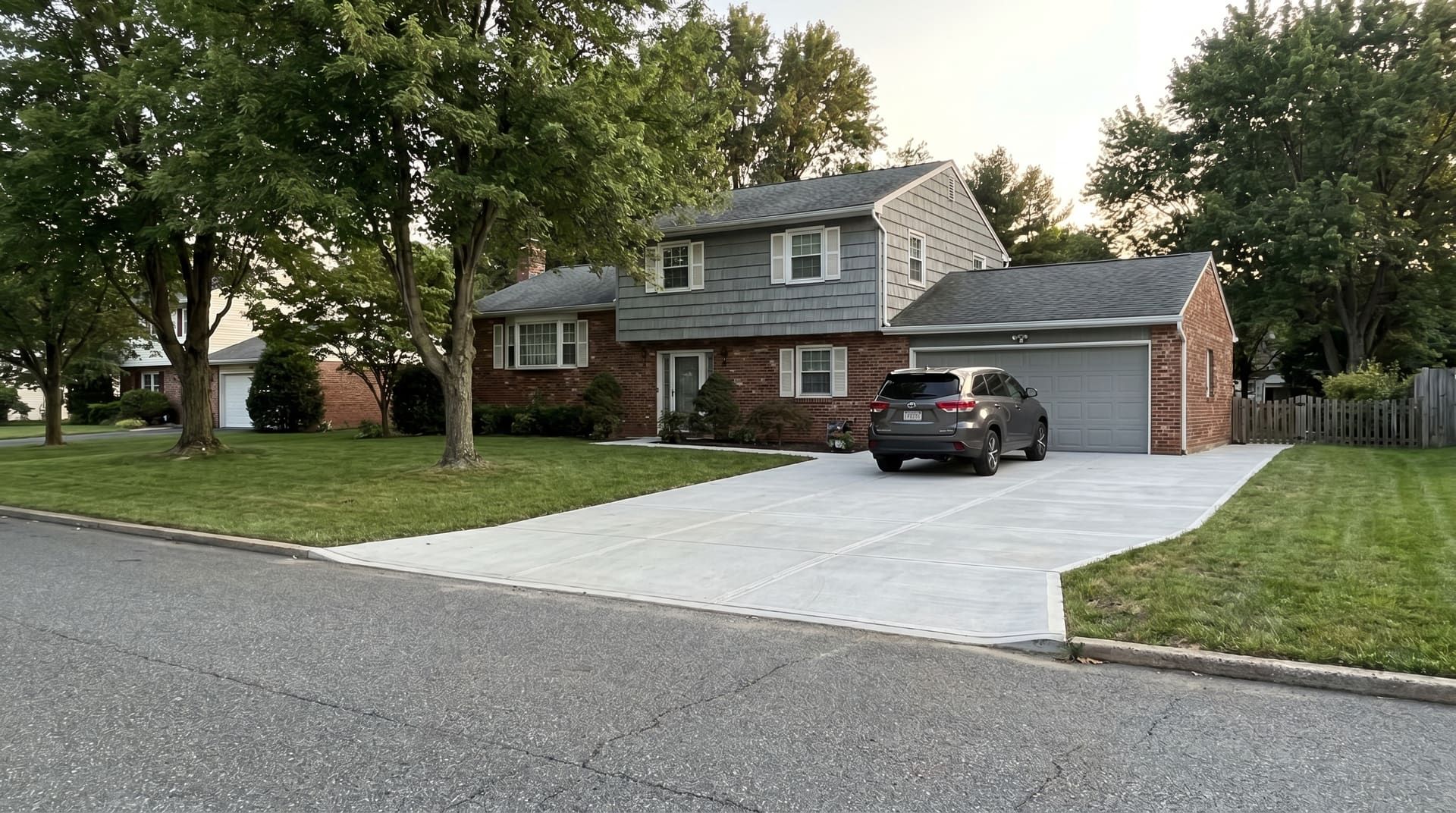
[ Recent project / King of Prussia, PA ]
NextGen Masonry
[ King of Prussia / Vital Stats ]
Population
Land Area
Median Build
Freeze-Thaw
[ Why King of Prussia ]
King of Prussia is one of the largest unincorporated communities in Montgomery County, with roughly 26,000 residents across a mix of postwar split-levels and colonials from the 1960s–70s and newer townhomes near Town Center. The 60-year-old housing stock in Gulph Mills, Swedeland, and Swedesburg means driveways, patios, and walkways from the original construction era are reaching the end of their practical service life.
KOP soil is the real challenge here. Montgomery County clay and silt-loam soils shift seasonally — expanding when wet, contracting when dry — and that movement combines with hard winter freeze-thaw to wreck a slab built on a thin base. A concrete slab poured on inadequate base in King of Prussia will heave, settle, and crack faster than in areas with better-drained, more stable soils. The answer is consistent and not complicated: dig down to undisturbed soil, lay 6 to 8 inches of compacted stone base, and pour freeze-resistant concrete. The stone base cuts off the water that would freeze and lift the slab in winter, and gives the concrete a stable bed to sit on.
Upper Merion Township (the governing jurisdiction for KOP) requires building permits for new concrete patios, paver installations, and retaining walls. New or enlarged driveways require a Plot Plan, a Stormwater (Class A) Permit if new hard surface is being added, and a Road Opening Permit if the work touches the street's apron. The permit desk is at 175 West Valley Forge Road. Permit review takes up to 15 business days — NextGen factors this into the schedule and files early to avoid delays.
The median household income in King of Prussia is approximately $107,000, and homeowners in the area invest heavily in exterior appearance. Stamped concrete patios, decorative paver pool decks, and exposed aggregate driveways are in high demand. These premium finishes are available from NextGen Masonry — but they are surface treatments over a spec-correct structural slab, not a substitute for base preparation. The finish does not compensate for a missing 6 inches of compacted stone.
Rainwater drainage is a real constraint for KOP projects. Upper Merion Township requires a Class A Stormwater Permit for any new hard surface — that triggers a township review of how the new hardscape handles runoff. NextGen builds in drainage on every project — pitch away from the house, positive drainage to lawn or storm inlet — and advises on pervious paver options when the stormwater rules are the binding constraint.
Common scopes in King of Prussia include: patio additions and replacements behind 1960s–70s colonials and split-levels; concrete and paver pool decks around in-ground pools that were installed in the 1980s–90s with original concrete surround now deteriorating; full driveway replacement on properties where the original 4-inch slab on minimal base has cracked from frost action; and segmental retaining walls managing grade changes in hillside lots in the Gulph Mills and Swedeland areas.
[ On the ground in King of Prussia ]
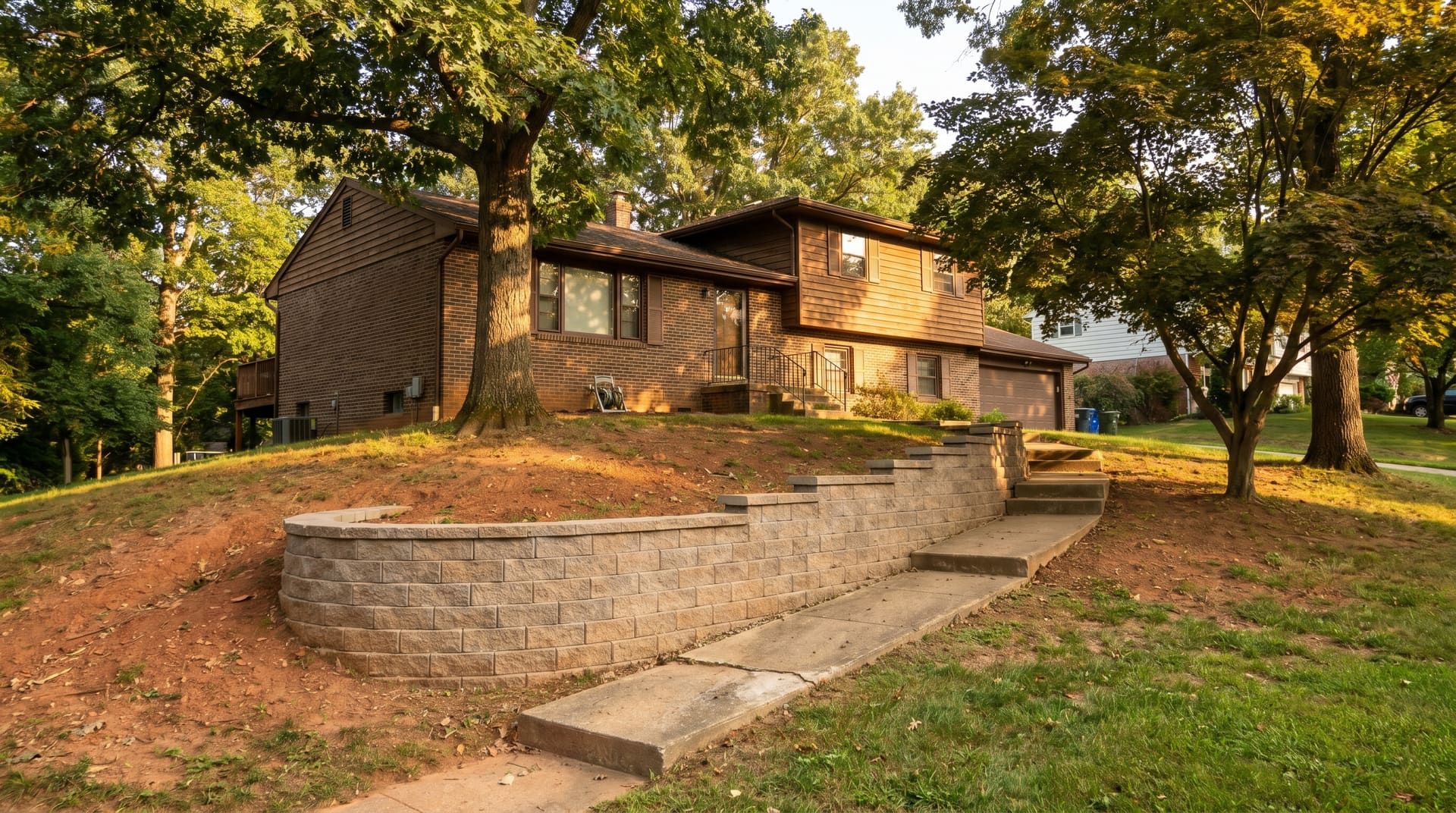
[ Streets we work · King of Prussia, PA ]
"KOP's clay soil moves with the seasons. Skip the deep stone base and the slab will tell you which winter the contractor cut the corner."
[ Field Note / King of Prussia ]
[ Climate Panel / Freeze-Thaw History ]
Why we use a freeze-resistant concrete mix.
Greater Philadelphia averages 25 freeze-thaw cycles per winter. Each cycle drives water into tiny pores in the concrete, where it freezes and expands ~9%. Without 5–7% entrained air, that pressure flakes the surface apart within 5 years. (Severe freeze-thaw zone per building code: ACI F2.)
Philadelphia · cycles per winter
10-yr avg · 25
Freeze-thaw zone
Severe (F2 → F3)
Building-code rating for our climate
Concrete strength
4,500 → 5,000 psi
Higher PSI = denser, more crack-resistant
Entrained air
5–7%
Tiny air pockets act like shock absorbers
[ Common scopes in King of Prussia ]
What we typically pour here.
[ Neighborhoods served ]
5 neighborhoods.
- ·Gulph Mills
- ·Swedeland
- ·Swedesburg
- ·Village at Valley Forge
- ·Town Center / Downtown KOP
King of Prussia FAQ
Common questions about concrete in King of Prussia.
Q.01
Why do concrete slabs crack so easily in King of Prussia?
KOP sits on Montgomery County clay and silt-loam soils that expand when wet and contract when dry. When that seasonal soil movement combines with winter freeze-thaw, any concrete slab without a deep, compacted stone base underneath it will heave and crack. The clay absorbs water, the water freezes and expands, and the slab lifts — then settles unevenly when the frost melts. The fix is consistent: 6 to 8 inches of compacted stone base cuts off the rising groundwater, gives the slab firm bearing, and replaces the soil that would otherwise freeze and lift it.
Q.02
What permits does Upper Merion Township require for a new patio in KOP?
Upper Merion Township requires a building permit for new concrete patios, paver installations, and retaining walls. For any project that adds new hard surface — meaning the patio doesn't simply replace an existing one at the same footprint — a Class A Stormwater Permit is also required (it's the township's review of how rainwater will be managed). NextGen Masonry handles permit research and filing for all King of Prussia projects. The permit desk is at 175 West Valley Forge Road, and review typically takes up to 15 business days.
Q.03
Does NextGen Masonry do stamped concrete patios in King of Prussia?
Yes. Stamped patios with integral color, border patterns, and texture stamps are common in King of Prussia. The pattern is pressed into the surface after the pour, before the slab fully cures — but what's underneath is the same as any other patio we build: a deep packed-stone base, winter-rated concrete, and planned crack-control lines cut on a grid. The stamped finish is the look. The base is what makes it last.
Q.04
Do I need a permit to resurface my existing driveway in King of Prussia?
In Upper Merion Township, resurfacing an existing driveway at the same footprint does not require a permit. Expanding the driveway — adding width, extending the length, or adding a turnaround pad — requires a building permit, a stormwater assessment, and potentially a road opening permit if the work touches the right-of-way. NextGen confirms the applicable requirements for each scope during the estimate visit.
Q.05
What retaining wall options are available for sloped lots in Gulph Mills?
For grade changes in Gulph Mills, Swedeland, and other hillside sections of King of Prussia, NextGen Masonry installs stackable concrete block retaining wall systems — Allen Block, Versa-Lok, and comparable systems. These are sized for the specific wall height, soil conditions, and what's sitting above the wall (driveway, building, landscape). Walls over 4 feet tall need a building permit in Upper Merion Township and may need stamped engineering drawings. NextGen handles permit research and tells the homeowner up front whether the project fits within the manufacturer's standard sizing tables or needs a structural engineer's stamp.