
Retaining Walls
Segmental block retaining walls for sloped yards, driveway cuts, and erosion control — with a proper drainage column so the wall lasts.
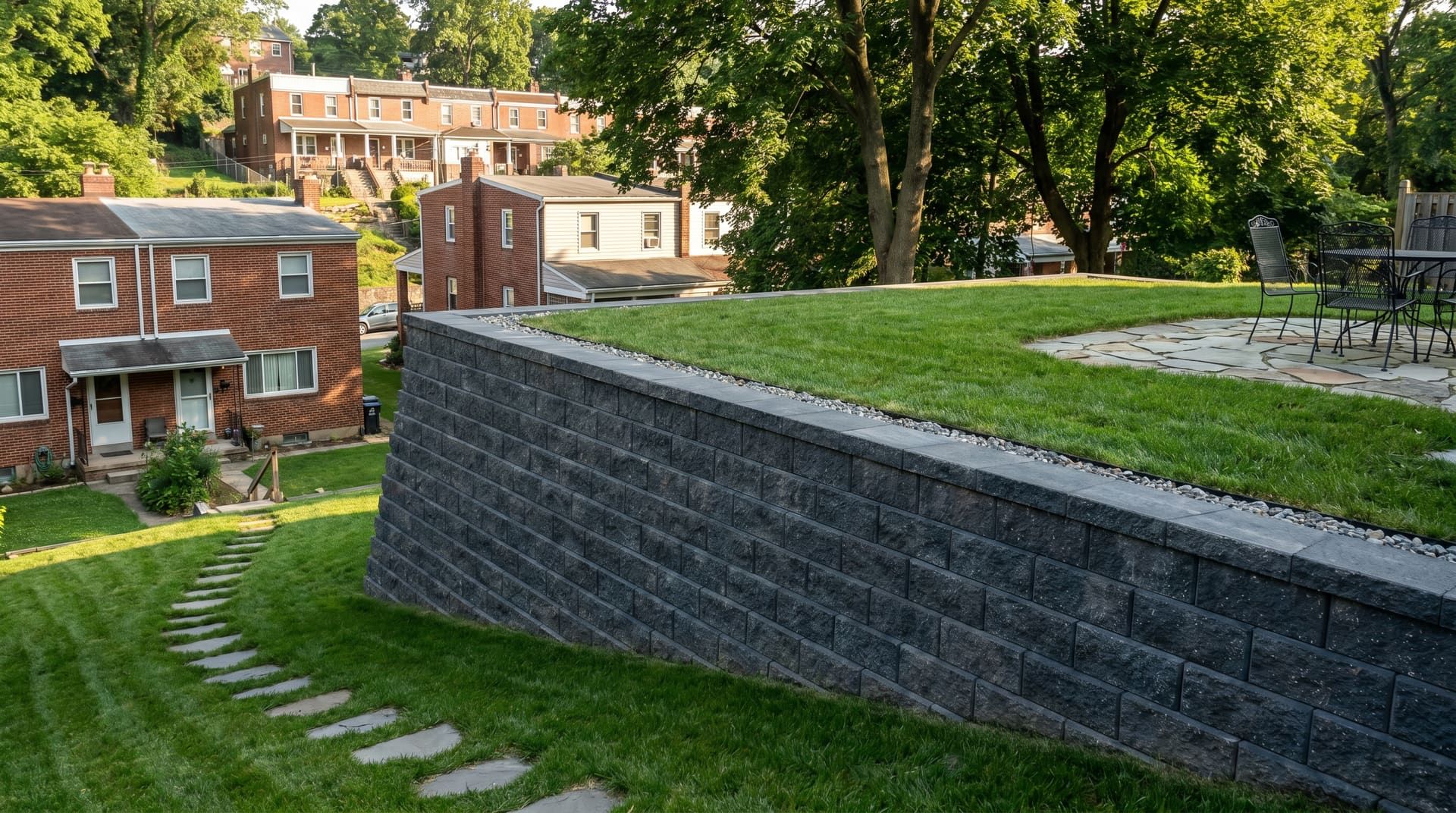
[ Recent project / Retaining Walls ]
Lower Montco, PA
[ Why It Matters ]
A retaining wall holds back dirt — and water in the dirt. After a heavy rain, that wet soil weighs a lot more than dry soil, and it presses against the wall continuously. Without a way for the water to drain out behind the wall, that pressure keeps building until something gives — the wall starts to lean, then to bulge, then to fail in a hurry. A wall that lasts is a wall that drains. That's most of the secret.
[ Recent work / Two from the file ]
A different home. The same approach.
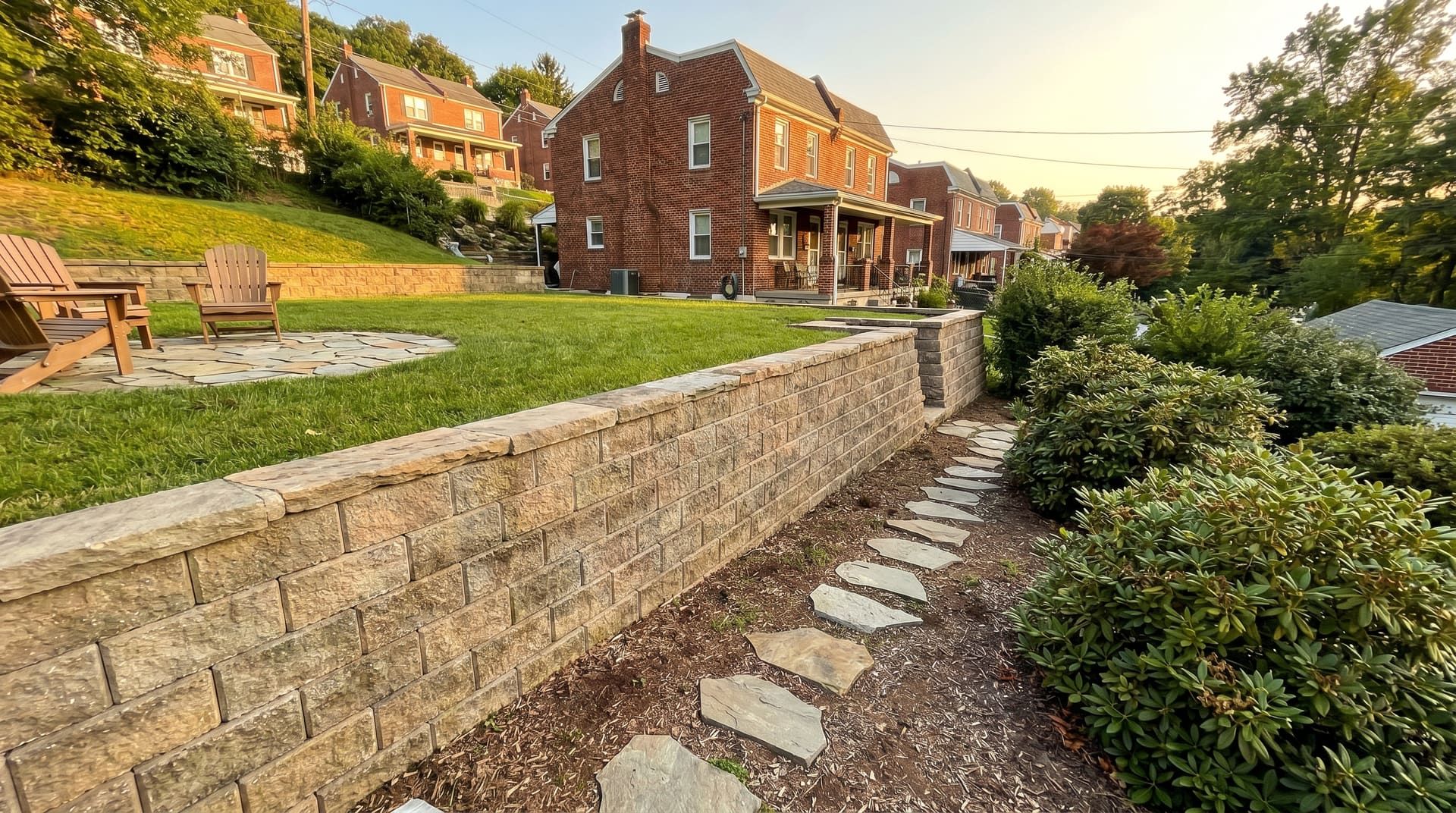
P.01 · Recent project
Retaining
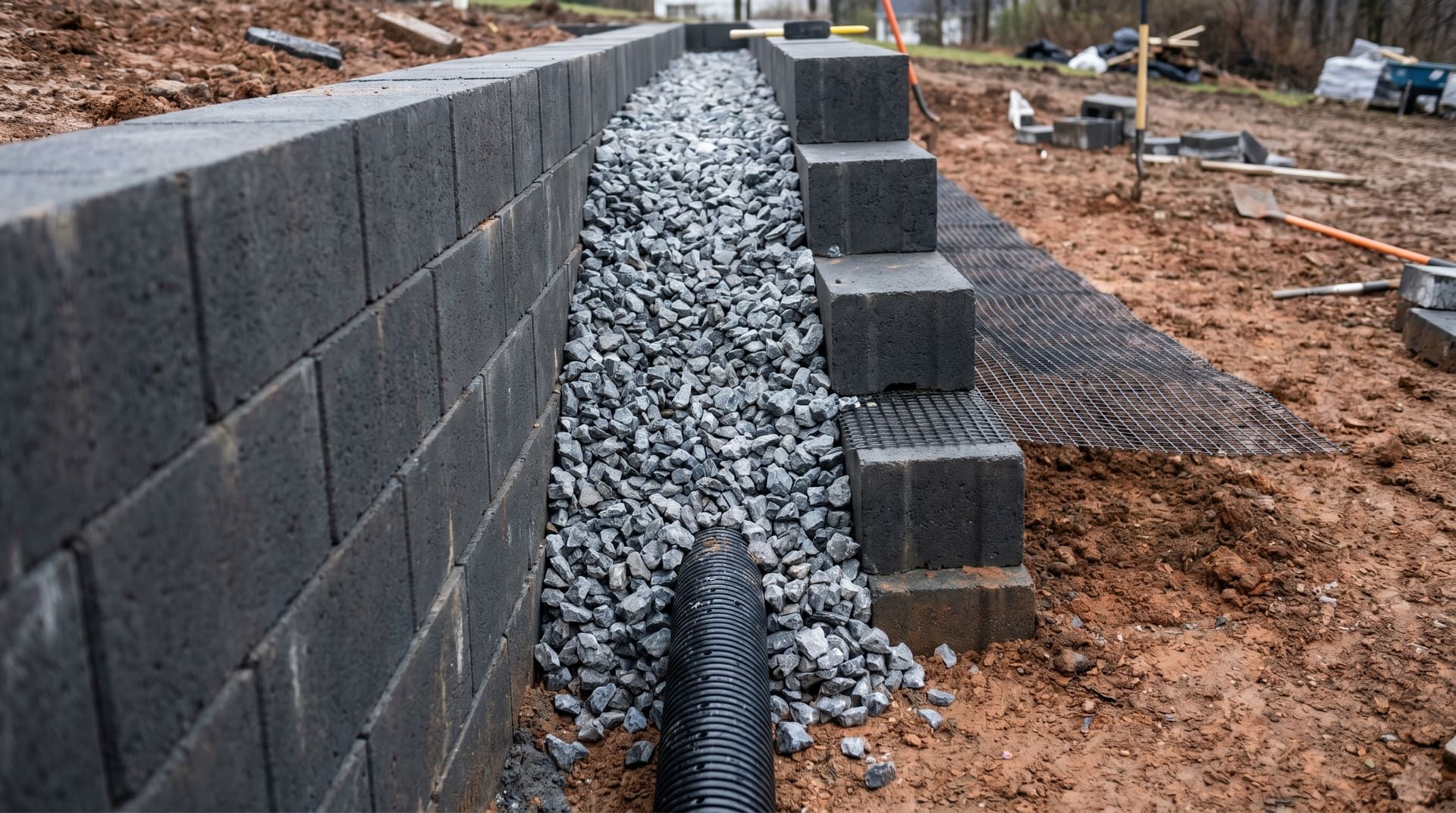
P.02 · Craft detail
Retaining
[ Mid-pour · Layered Build-up ]
Build-up · Retaining Walls.
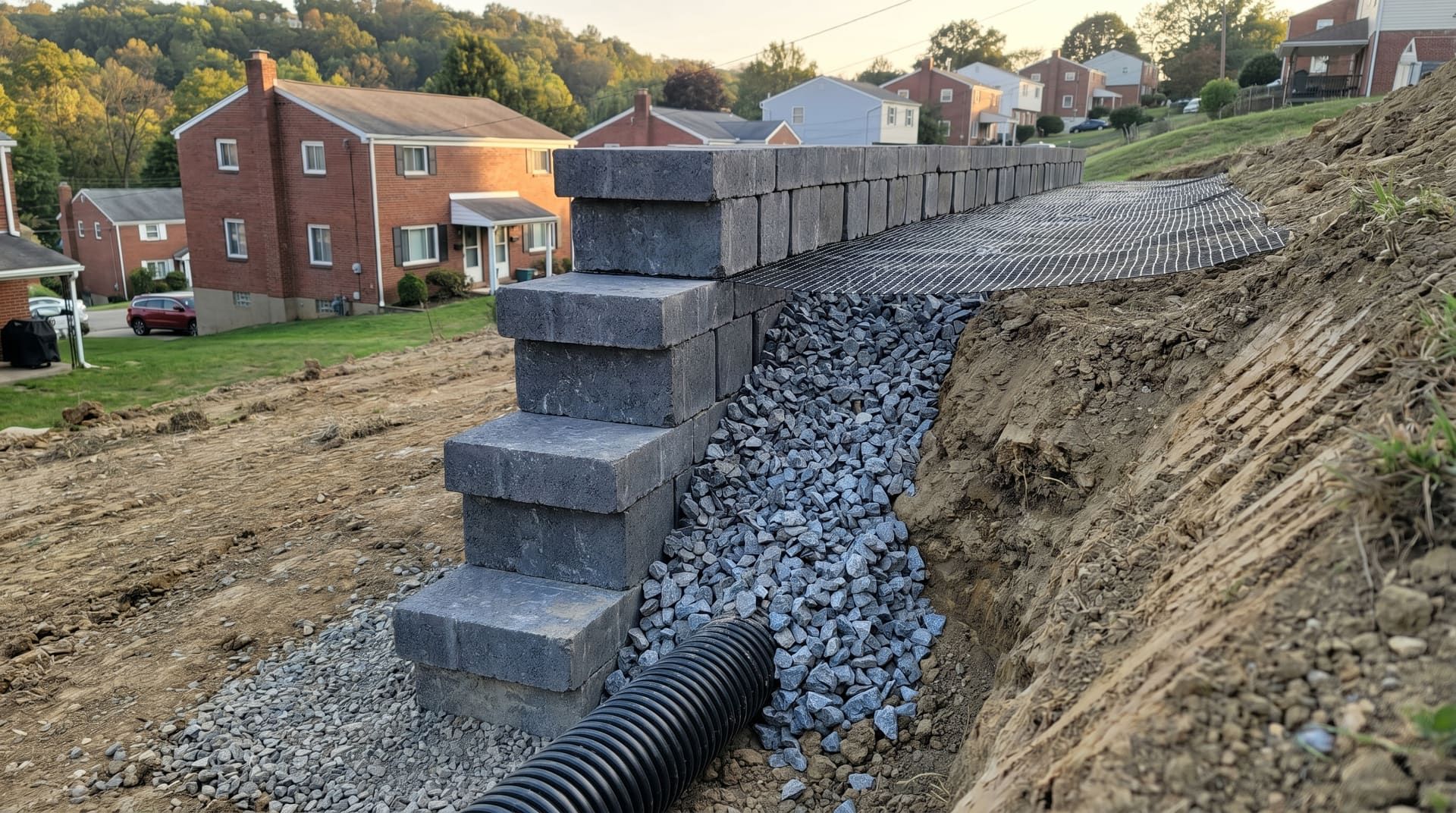 1 2 3 4 5 6
- 1
Compacted soil base
The wall's foundation
- 2
Crushed stone leveling pad
6 in.
Sets the bottom row perfectly level
- 3
Drainage stone behind wall
12 in. wide
Water drains down — can't pressure the wall
- 4
Drain pipe at the base
4 in.
Daylights to open ground at the footing
- 5
Soil-lock layers (geogrid)
Ties the wall and the dirt into one mass
- 6
Wall blocks
Dry-stacked with a 1° backward lean — no mortar
"What holds a retaining wall up isn't the wall. It's the drainage behind it and the reinforcement layered into the dirt."
[ Field Note / Retaining Walls ]
[ Pricing / Per Square Foot ]
Investment range for retaining walls.
Segmental block (under 4 ft)
$35 – $55 / sq ft face
Engineered wall (4–8 ft)
$55 – $90 / sq ft face
Stone-veneer dressed wall
$90 – $160 / sq ft face
Every quote is line-itemed — base, concrete, forms, finish, and removal listed separately.
[ Specification Sheet ]
Build spec.
S.01
Block system
Stackable concrete blocks (Allen Block, Versa-Lok, or equal)
S.02
Wall footing
First course below ground; below frost on walls 4+ ft
S.03
Backward lean
About 1 in. of lean per 1 ft of height
S.04
Stone drainage column
12 in. of clean stone with a drain pipe at the base
S.05
Soil-reinforcement layers
Geogrid mesh — ties wall and dirt into one mass
S.06
Backfill
Clean angular fill — no clay or organic soil
S.07
When a permit is needed
Walls 4 ft and taller in most Montco townships
S.08
Max height without an engineer
Typically 4–6 ft per manufacturer sizing tables
[ Frequently Asked ]
Common questions about retaining walls.
Q.01
How tall can a retaining wall be without an engineer in Montgomery County?
Most Montco townships require a building permit for retaining walls over 4 feet tall. Whether you need stamped engineering drawings depends on the township and the specific wall conditions. Block manufacturers — Versa-Lok, Allen Block, and others — publish standard sizing tables for walls up to 4 to 6 feet under typical residential conditions (no driveway, building, or other heavy load above the wall). When a wall exceeds those table limits or sits close to a structure, a structural engineer's stamp is required. NextGen Masonry researches the requirements for each specific address during the estimate visit and tells the homeowner up front what's needed before the project begins.
Q.02
What causes a retaining wall to fail or bulge?
Most retaining-wall failures come down to one thing: drainage. A wall without adequate drainage behind it builds up water pressure after every heavy rain — water-saturated soil weighs significantly more than drained soil. That pressure pushes on the back of the wall continuously. Over multiple wet-dry and freeze-thaw cycles, the pressure adds up and the wall starts to tilt or bulge. Missing or undersized soil-reinforcement layers (geogrid) are a secondary cause on stackable block walls. NextGen installs a 12-inch column of clean stone with a drain pipe at the base on every wall — this is not optional.
Q.03
Can I build a retaining wall right on my property line?
Setback requirements for retaining walls vary by municipality and zoning district. In most residential zones in Montco townships, structures including walls must meet minimum setbacks from property lines — typically 5 feet in rear yards and 3 feet in side yards for accessory structures, though this varies. A wall right on the property line may also create a neighbor-property relationship if the retained soil is on the neighbor's side, which can create easement or maintenance issues. NextGen Masonry reviews the proposed wall location against zoning setbacks during the estimate visit before finalizing the design.
Q.04
What is the difference between a segmental block wall and a poured concrete wall?
A stackable block wall is built from interlocking concrete units stacked without mortar, with a built-in backward lean and soil-reinforcement layers (geogrid) extending into the dirt behind the wall. Block walls handle small soil shifts well — each unit can move slightly without cracking the system. A poured concrete wall is one continuous solid wall poured in place — it has higher structural capacity but requires engineered design, forming, and pouring. For residential grade changes up to about 6 feet, block walls are the standard choice for their flexibility, built-in drainage, and lower cost. Poured walls come into play when the load or site conditions exceed what a block system can do.
Q.05
How long does a segmental retaining wall last in PA?
A properly installed stackable block wall with correct drainage and soil-reinforcement layers has a design life of 75 to 100 years according to most manufacturers. The blocks themselves are dense concrete — essentially impervious to freeze-thaw damage. What does age in a block wall is the geogrid (typically rated 75+ years), the drain pipe (lasts indefinitely surrounded by clean stone), and the joint sand or adhesive at the cap stones (reseal every 5–10 years as needed). The most common cause of early failure isn't materials wearing out — it's drainage failure, usually because the drain pipe wasn't installed or was installed incorrectly.
[ Coverage / Lower Montco ]