
Concrete Work in Bridgeport Done Right.
NextGen Masonry is based right here in Bridgeport. We've walked the rowhouse stoops on DeKalb and Fourth Street. We know what the borough lets you build and what they don't, and we know which streets you can't fit a concrete truck down. Concrete and hardscape that holds up in a 1.1-square-mile river borough that's seen every winter Pennsylvania has thrown at it.
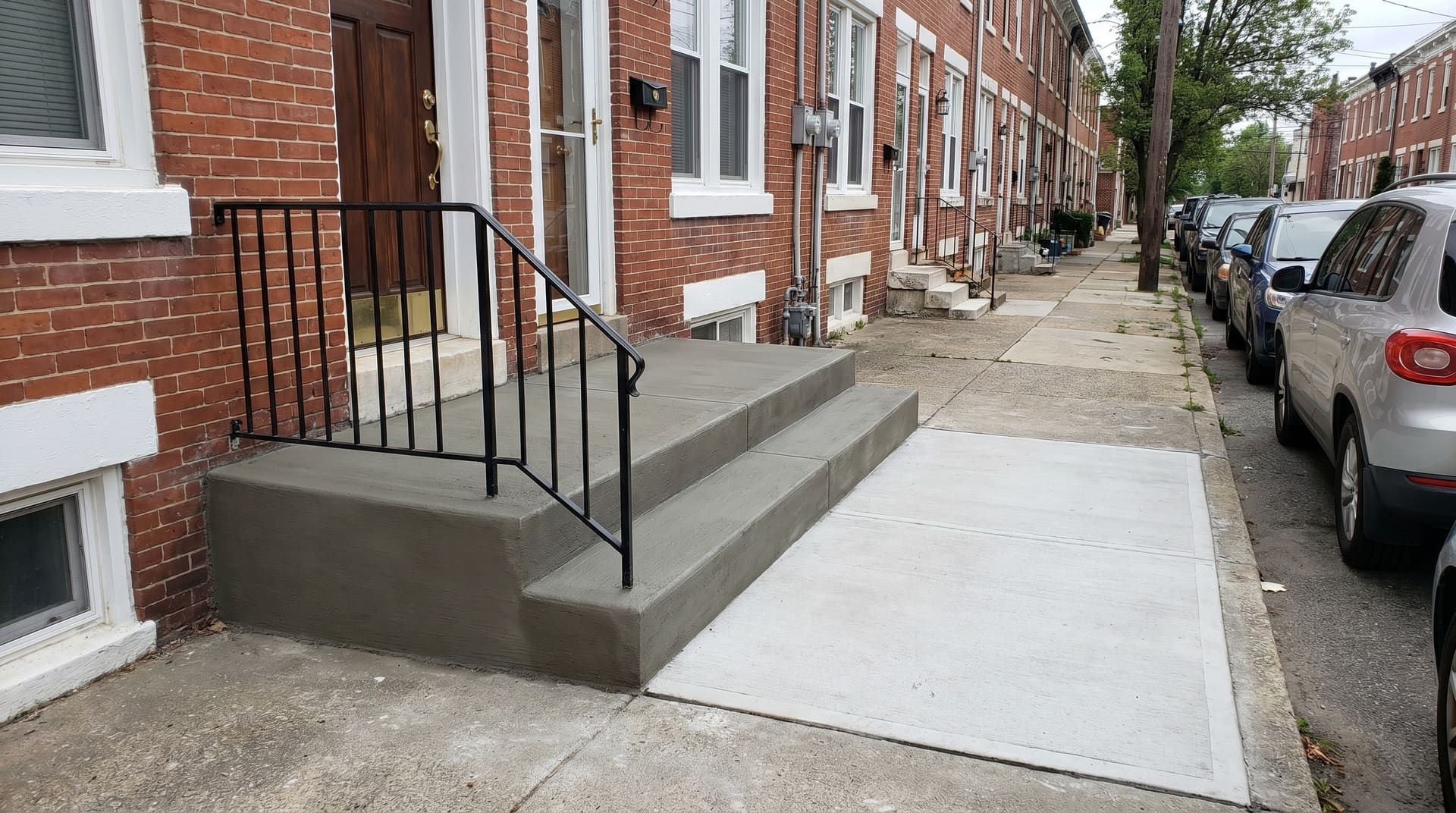
[ Recent project / Bridgeport, PA ]
NextGen Masonry
[ Bridgeport / Vital Stats ]
Population
Land Area
Median Build
Freeze-Thaw
[ Why Bridgeport ]
Bridgeport is a 1.1-square-mile river borough of about 5,200 people, packed in tight between Norristown and the Schuylkill. Most of the houses are rowhouses and twins built between 1900 and 1920 — which means most of the concrete on those properties (stoops, sidewalks, driveways, the rear patio if there is one) is the original concrete from when the house was built, or close to it. Seventy-plus Pennsylvania winters is a lot of asking, and most of those slabs are showing it.
NextGen Masonry is headquartered in Bridgeport — we're not a regional contractor who added the borough to a coverage list. We work here. We know the DeKalb Street corridor is dense enough that trucks and debris have to be staged carefully. We know the borough sets limits on how much of your lot you can pave over, so a new patio or wider driveway needs a conversation about that before we quote. And we know Borough Hall makes contractors register annually with proof of insurance before they'll issue permits — we are registered.
Lower Montco sees 20 to 30 freeze-and-thaws every winter, but Bridgeport sits right on the Schuylkill, which means more moisture events than inland towns. That speeds up surface damage on flat concrete — driveways, sidewalks, stoop treads. The answer is the same as everywhere else but it matters more here: a winter-rated concrete mix on a deep, packed stone base. That's standard on every NextGen job.
Nearly half of Bridgeport's housing stock is renter-occupied, which means a significant share of exterior concrete work falls to property investors and landlords. We work with both owner-occupants and investors on stoop replacements, walkway repairs, and driveway tear-outs. The same specification applies regardless of who owns the property — base prep, mix spec, and permit compliance are not owner-versus-investor variables.
Common scopes in Bridgeport include: front stoop replacement on rowhouse properties (often the original cast-in-place stoop from 1910–1920, cracked and detached from the foundation); concrete sidewalk panel replacement along the property frontage (borough code requires adjacent owners to maintain public sidewalk); driveway replacement in the limited space between homes; and rear patio additions where small backyards allow.
Every Bridgeport project starts with a permit check. The borough requires permits for driveways, patios, and any work involving earth disturbance. PA One Call (811) is mandatory before any excavation. Inspections are scheduled through Borough Hall with 24-hour notice. NextGen handles all of this — permit research, filing, 811 call, and inspection coordination — as part of the project scope.
[ On the ground in Bridgeport ]
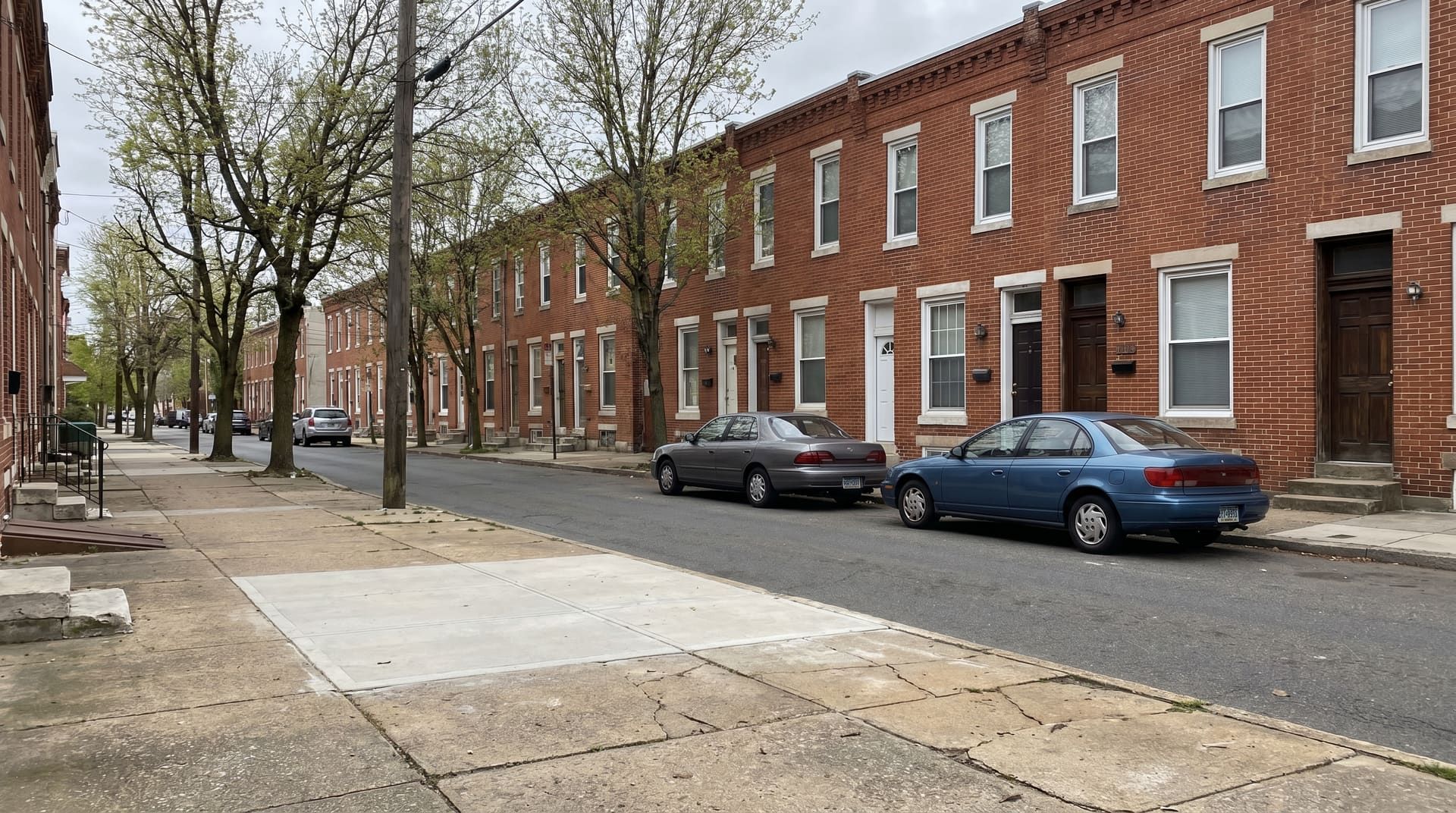
[ Streets we work · Bridgeport, PA ]
"The river changes how long the concrete needs to cure. It doesn't change how we build under it."
[ Field Note / Bridgeport ]
[ Climate Panel / Freeze-Thaw History ]
Why we use a freeze-resistant concrete mix.
Greater Philadelphia averages 25 freeze-thaw cycles per winter. Each cycle drives water into tiny pores in the concrete, where it freezes and expands ~9%. Without 5–7% entrained air, that pressure flakes the surface apart within 5 years. (Severe freeze-thaw zone per building code: ACI F2.)
Philadelphia · cycles per winter
10-yr avg · 25
Freeze-thaw zone
Severe (F2 → F3)
Building-code rating for our climate
Concrete strength
4,500 → 5,000 psi
Higher PSI = denser, more crack-resistant
Entrained air
5–7%
Tiny air pockets act like shock absorbers
[ Common scopes in Bridgeport ]
What we typically pour here.
[ Neighborhoods served ]
3 neighborhoods.
- ·DeKalb Street corridor
- ·Fourth Street commercial area
- ·Schuylkill riverfront
Bridgeport FAQ
Common questions about concrete in Bridgeport.
Q.01
Does NextGen Masonry work in Bridgeport Borough specifically?
Yes — NextGen Masonry is headquartered in Bridgeport, PA. Matthew Bono grew up working in this borough and knows the specific permit requirements at Bridgeport Borough Hall, the staging constraints on tight rowhouse streets, and the borough's limits on how much of your lot can be hard surface (driveway + patio + roof combined). We are registered contractors with Bridgeport Borough and handle permit research and filing for every project.
Q.02
What concrete work is most common on Bridgeport rowhouses?
Front stoop replacement is the most frequent request on Bridgeport rowhouses. The original stoops on pre-1940 homes were often poured without footings below frost depth, and 70-plus winters of freeze-thaw action has cracked and detached most of them from the house. Concrete sidewalk panel replacement is also common — borough code requires adjacent property owners to maintain the public sidewalk in front of their property. Driveway replacement and rear patio additions are frequent on properties with garage access from alley streets.
Q.03
How does NextGen handle impervious-surface limits in Bridgeport?
Bridgeport Borough limits how much of your lot can be hard surface (driveway, patio, roof, and any other paving combined). The exact percentage depends on your zoning district. Before we finalize any estimate for a new patio, wider driveway, or other added hardscape, the crew confirms how much of your lot is already paved and whether the addition keeps you under the limit. If it would push you over, we discuss options — some pervious paver systems (where rainwater drains through) count less toward that limit, and we can advise on what the borough currently allows. We don't pour concrete that would put a homeowner in code violation.
Q.04
How long does concrete work take in Bridgeport's dense streets?
On most Bridgeport rowhouse projects, base prep and forming happen on day one, the pour is day two, and cleanup and joint cutting are day three. The main variable in the borough is staging — trucks, equipment, and debris need to be managed in tight street widths. NextGen works with neighbors and coordinates with the borough on any temporary street use as needed. We do not start a project without a clear plan for material delivery and debris removal on the specific block.
Q.05
Does Bridgeport require a permit to replace a concrete stoop?
Replacing an existing stoop at the same footprint generally does not require a permit in Bridgeport, but contractors must be registered with the borough before performing any work. New stoop structures, structural changes, or any work involving grade change or earth disturbance may require a permit from Bridgeport Borough Hall. NextGen Masonry is registered with the borough and confirms permit requirements for each specific scope during the estimate visit.