
Pool Decks
Concrete and paver pool decks for in-ground pools in lower Montco — slip-resistant finishes, flex seams at the coping, and winter-rated mix throughout.
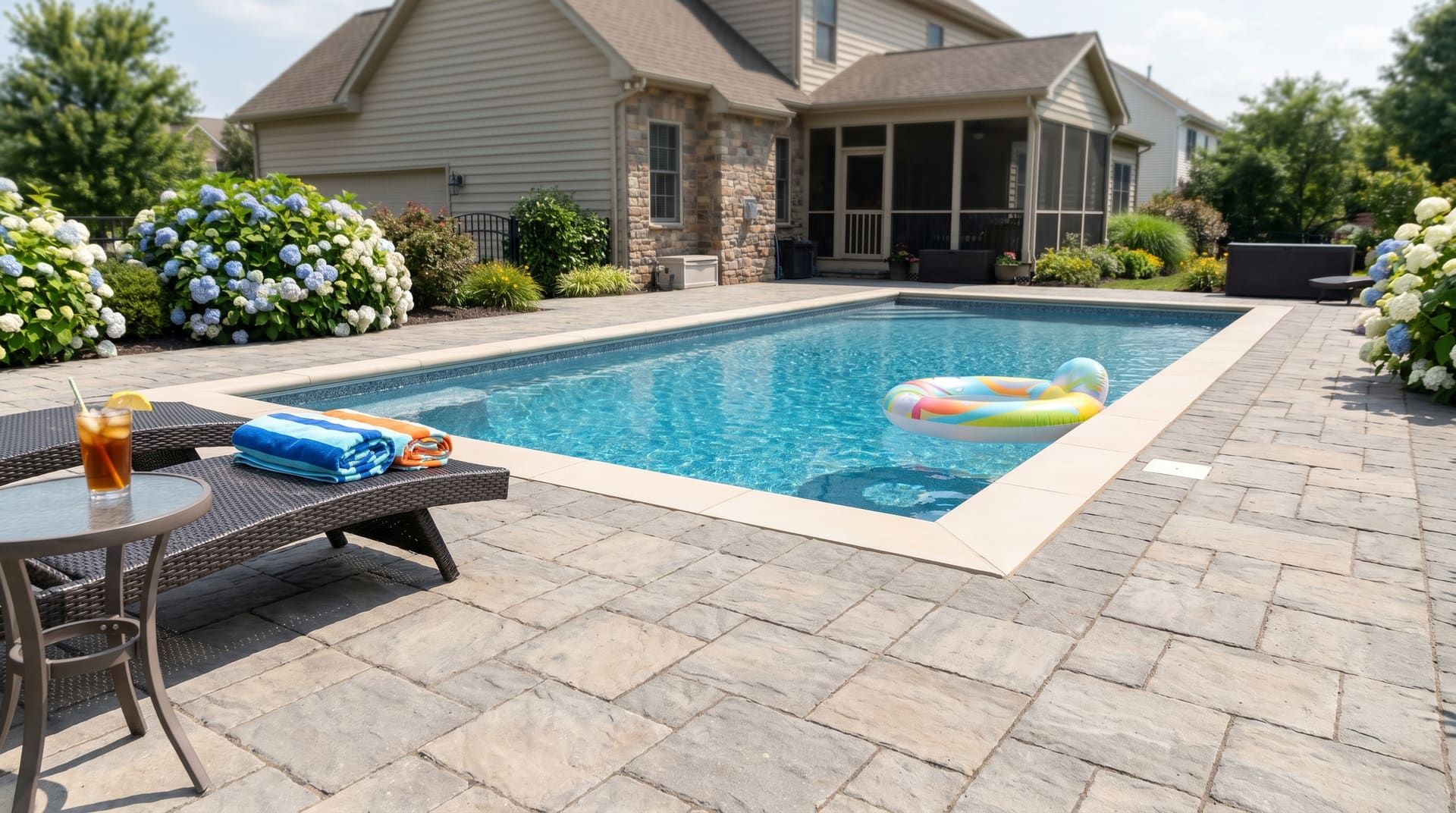
[ Recent project / Pool Decks ]
Lower Montco, PA
[ Why It Matters ]
A pool deck is the most punished concrete on your property. It's wet, then it's dry, then it's bleached by the sun, and the chlorine off the water doesn't help. Then we get the freeze and thaw of every Pennsylvania winter, but with a twist — your deck and your pool sit on different footings, so they move at different rates. If a deck wasn't built with a flexible seam where it meets the pool, that's where it cracks first.
[ Recent work / Two from the file ]
A different home. The same approach.
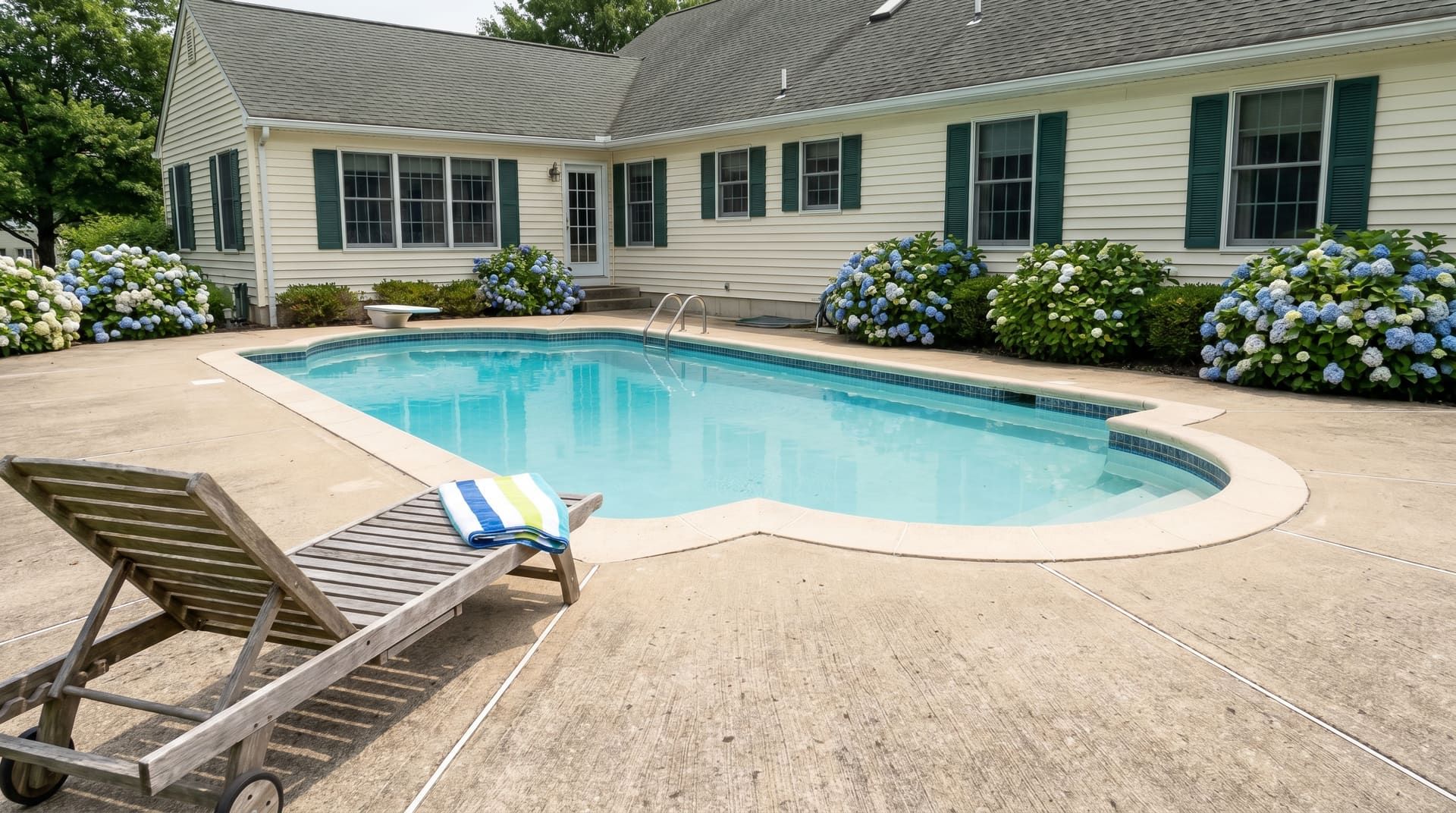
P.01 · Recent project
Pool
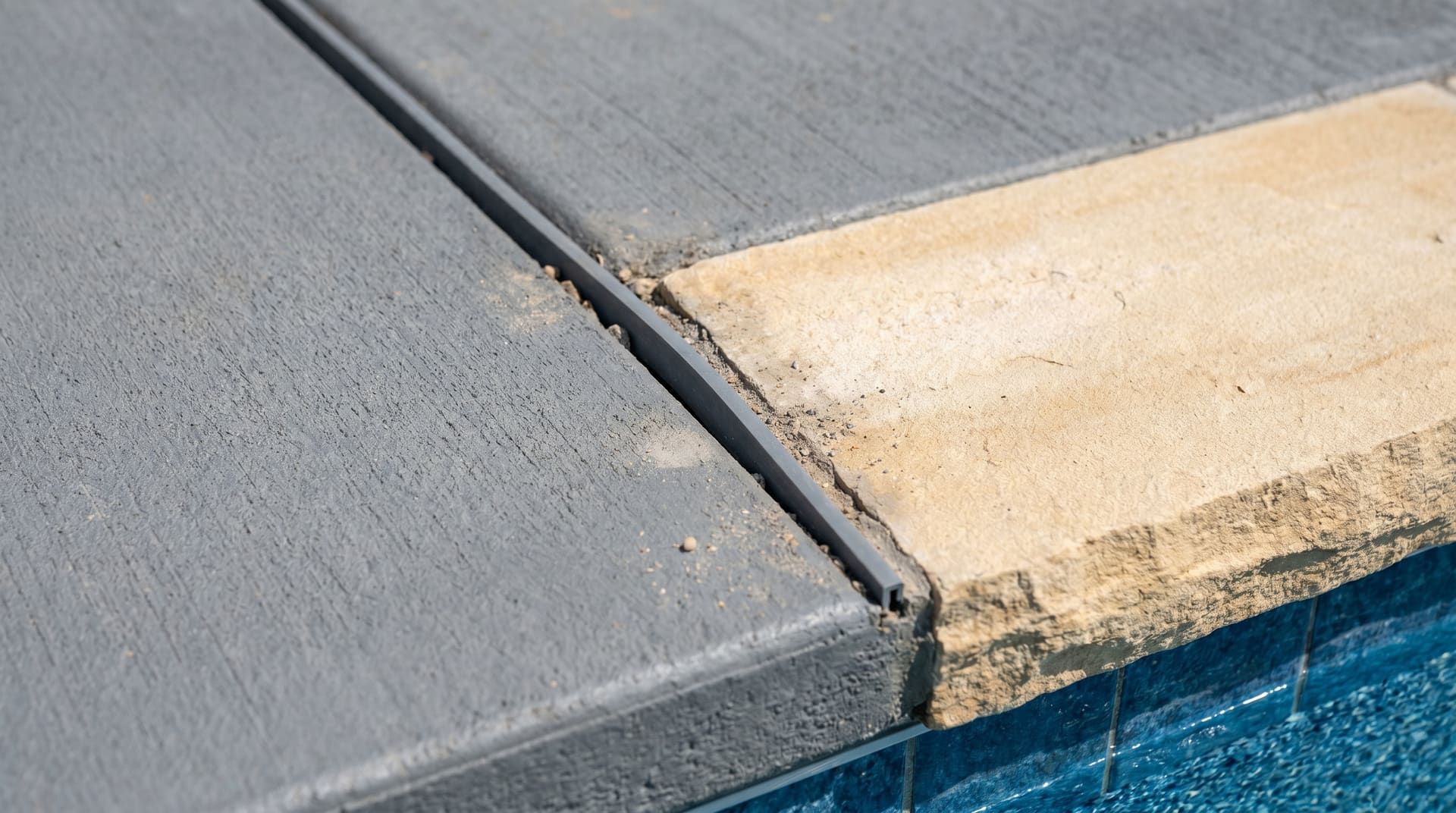
P.02 · Craft detail
Pool
[ Mid-pour · Layered Build-up ]
Build-up · Pool Decks.
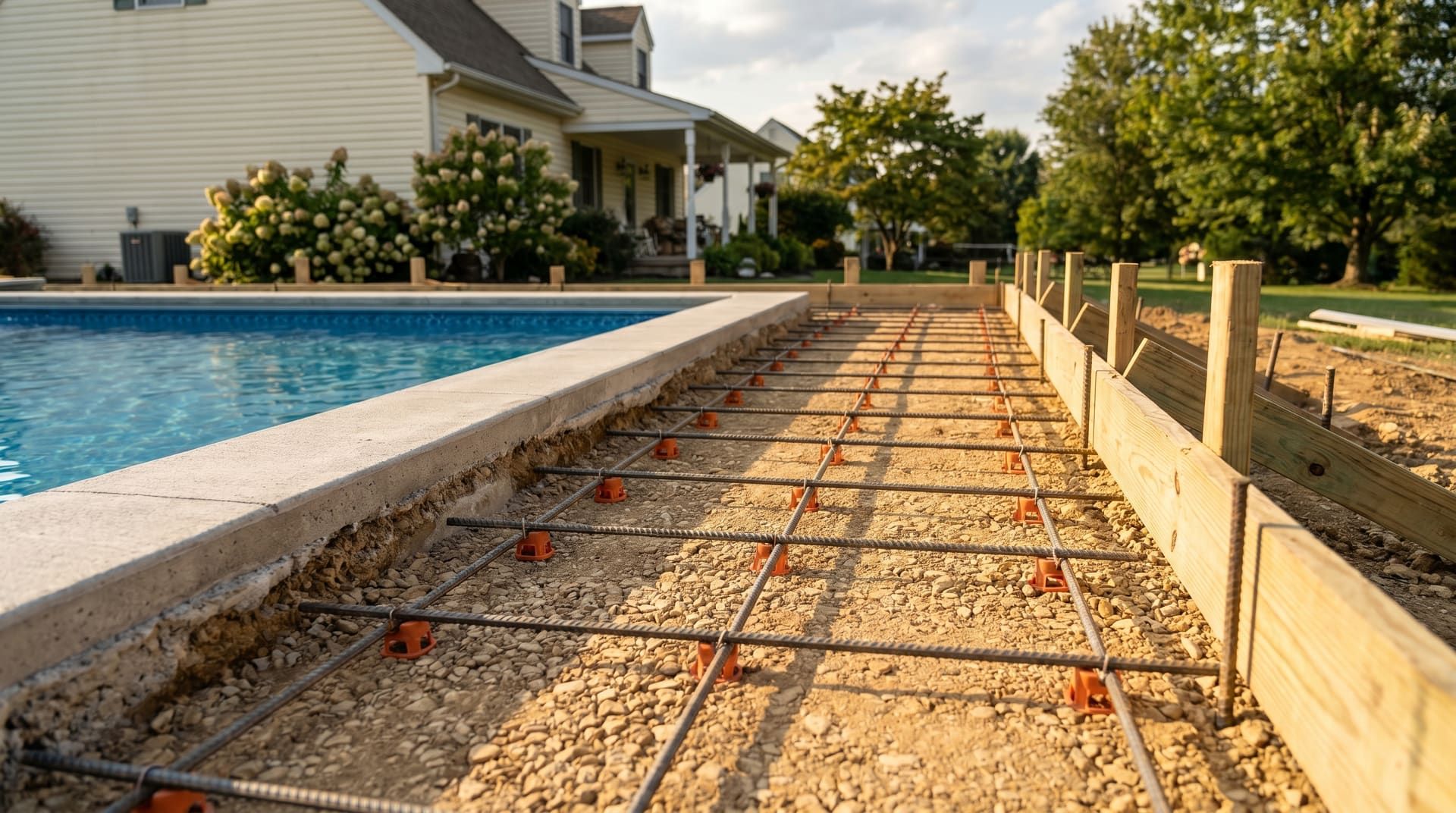 1 2 3 4 5 6
- 1
Compacted soil base
Excavated to undisturbed soil — stable foundation
- 2
Compacted stone base
6 in.
Drains water, gives the slab a level bed
- 3
Reinforcement
Tight rebar grid — spreads pool-deck loads
- 4
Concrete slab
4 in.
Mix rated for chlorine + winter freeze-thaw
- 5
Pool edge
Overhanging coping — finished, foot-friendly edge
- 6
Slope
1/4 in. per ft, draining away from the pool
"Pool decks need to slope away from the water. Always. Standing water at the edge is what kills them."
[ Field Note / Pool Decks ]
[ Finish Library / 4 Options ]
Pick the surface. Spec carries through to all of them.
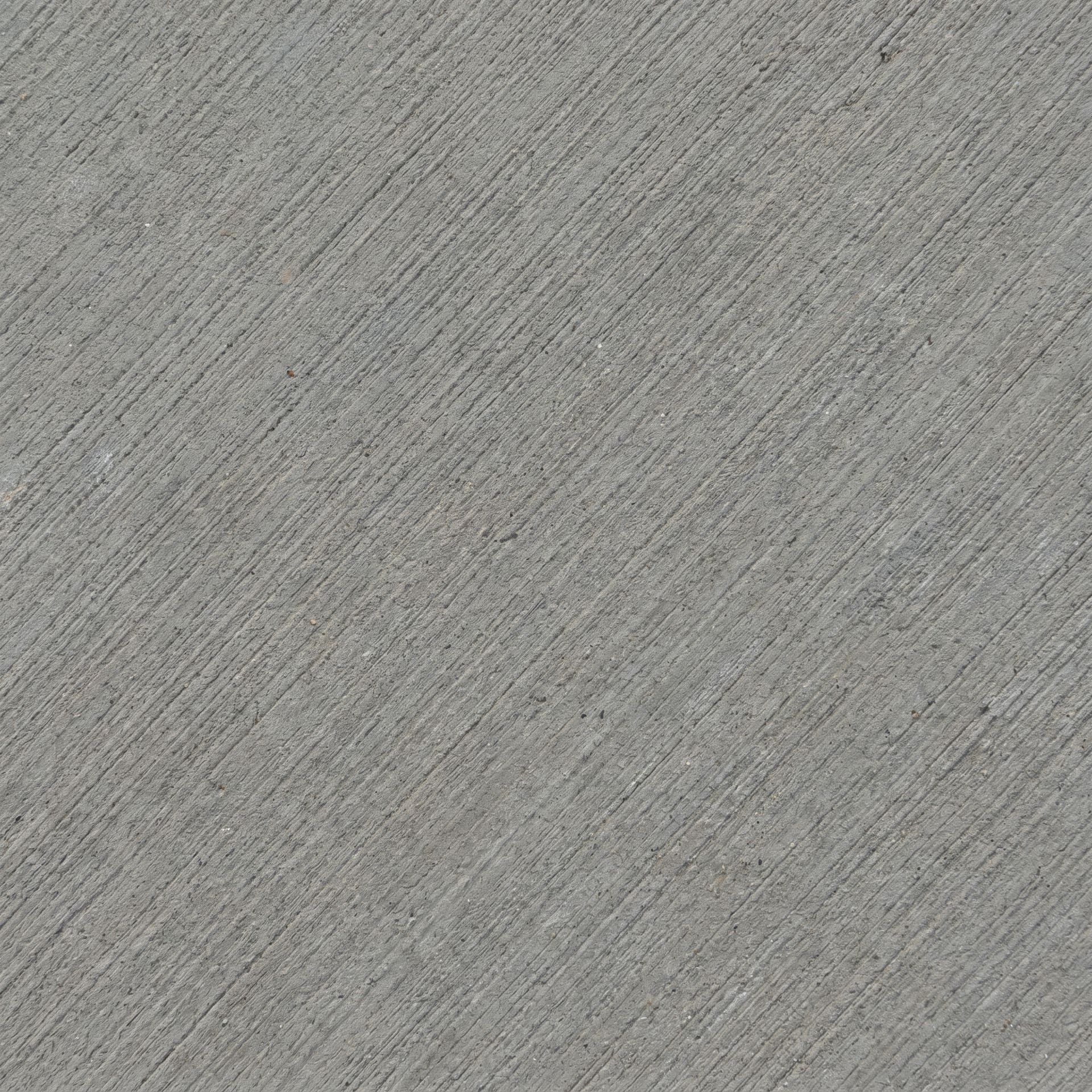 F.01
F.01Finish
Broom
Slip-resistant when wet
Brushed perpendicular to coping
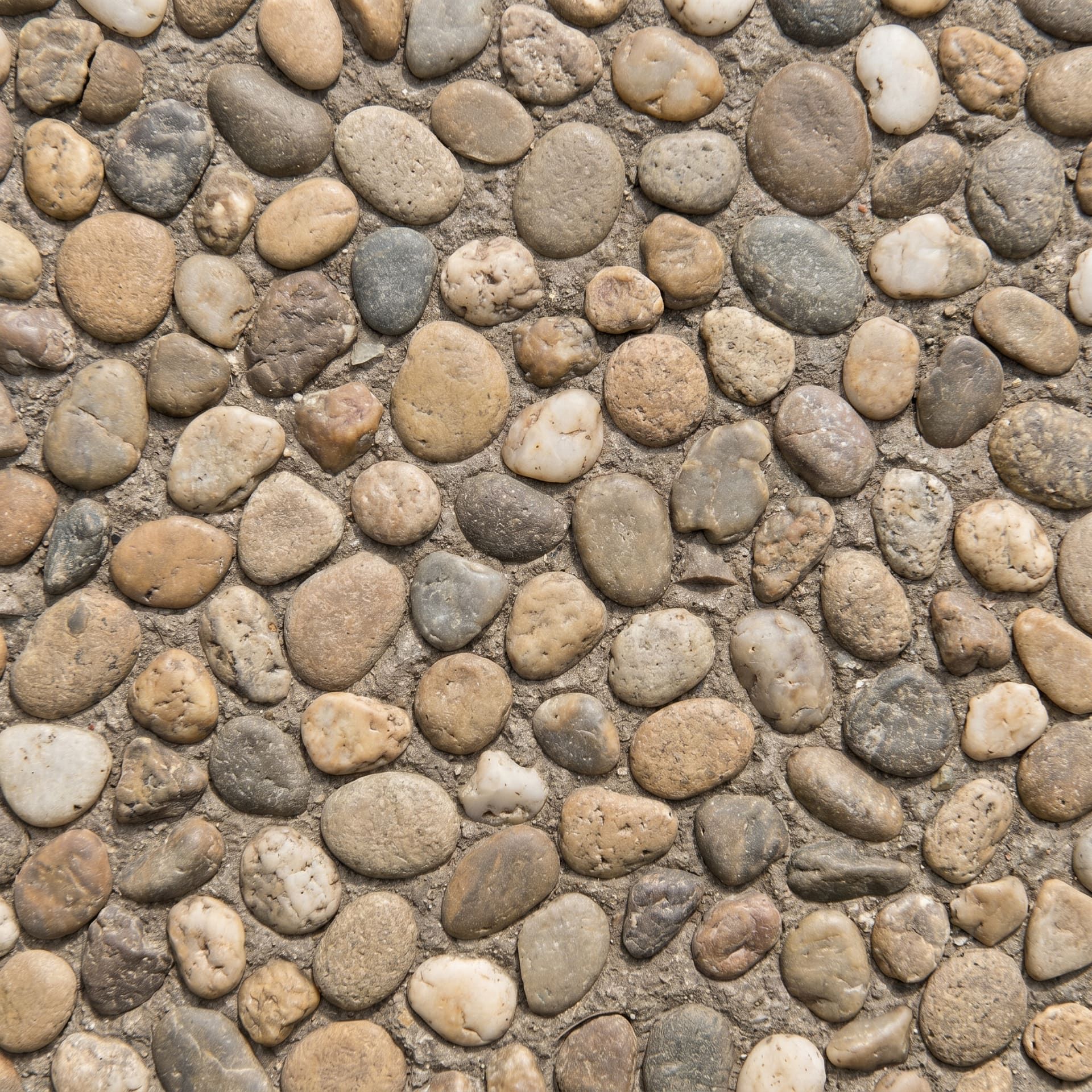 F.02
F.02Finish
Exposed Aggregate
Premium slip resistance
Best wet-foot surface
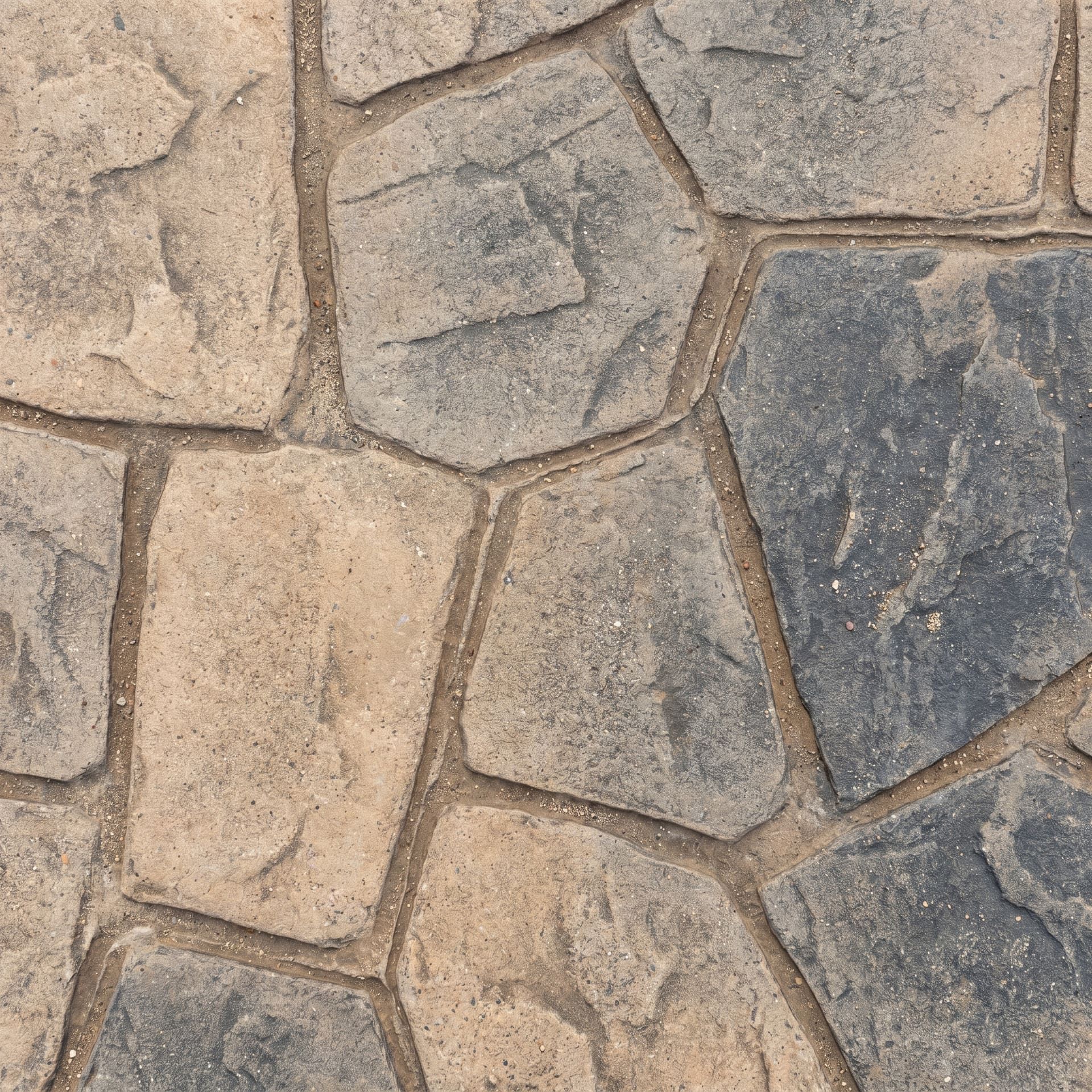 F.03
F.03Finish
Stamped
Sealed to resist chlorine
Salt-resistant sealer required
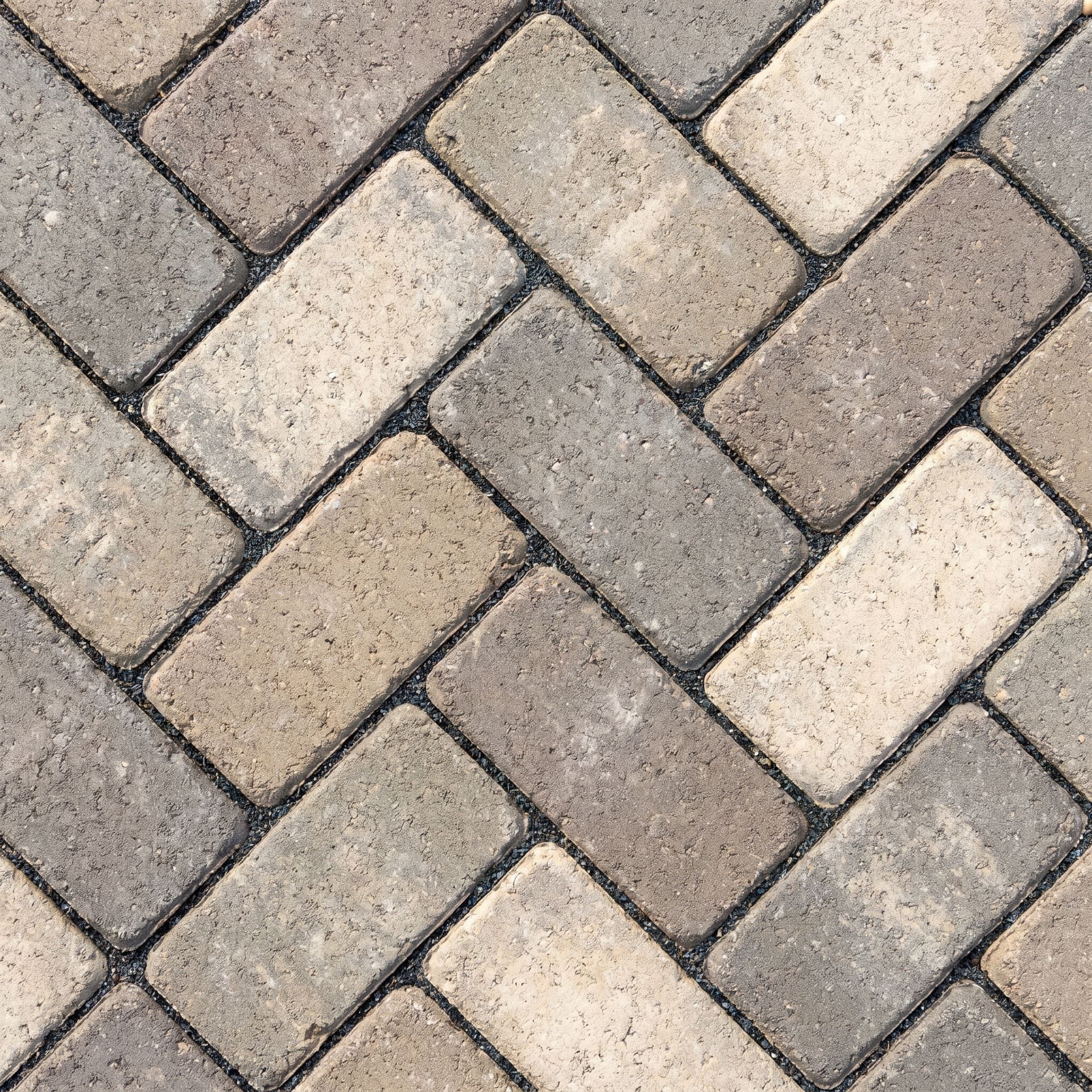 F.04
F.04Finish
Paver Surround
Removable for repair access
Travertine or porcelain
[ Pricing / Per Square Foot ]
Investment range for pool decks.
Broom-finish concrete
$20 – $32 / sq ft
Paver pool surround
$28 – $45 / sq ft
Resurface existing slab
$8 – $14 / sq ft
Every quote is line-itemed — base, concrete, forms, finish, and removal listed separately.
[ Specification Sheet ]
Build spec.
S.01
Concrete thickness
4 in. across the deck, 5 in. at the pool edge
S.02
Stone base depth
6 in. of compacted stone — drains water, stable bed
S.03
Concrete mix
4,000 psi mix — handles chlorine + winter
S.04
Surface finish
Broom strokes across the pool edge — grippy when wet
S.05
Flex seam at pool edge
Foam + sealant — deck and pool move independently
S.06
Crack-control lines
Every 8–10 ft, starting from the flex seam
S.07
Drainage slope
1/4 in. per ft, draining away from the pool
S.08
Chemical & salt resistance
Sealed at every joint — chlorine can't soak in
[ Frequently Asked ]
Common questions about pool decks.
Q.01
Why does a pool deck need a separate expansion joint at the coping?
The pool shell and the surrounding deck slab sit on different bearing surfaces. The pool shell is anchored to the ground by its own weight and structural design; the deck slab sits on a prepared aggregate base at grade. They move at different rates as soils shift seasonally and as temperature causes concrete to expand and contract. If the deck is poured tight against the coping without an expansion joint, one or both will crack as the differential movement accumulates. The expansion joint — foam backer rod and flexible polyurethane sealant — allows that movement without forcing cracking into either structure.
Q.02
Can I resurface my existing pool deck instead of replacing it?
Sometimes. Resurfacing is viable when the existing concrete slab is structurally sound — no hollow spots, no heaved panels, no active cracking — but the surface is spalled, scaled, or aesthetically worn. If the slab has settled unevenly, has multiple cracked sections, or has panels that are frost-heaved, resurfacing will not fix the underlying structural issues and the overlay will fail. Matthew evaluates every existing pool deck during the estimate site visit and gives an honest recommendation on resurface versus replacement based on what the slab actually shows.
Q.03
What pool deck surface is safest for bare feet around a pool?
A broom-finish concrete deck with the broom strokes running perpendicular to the pool edge (so feet drag across the texture rather than along it) is the most slip-resistant common surface. Exposed aggregate is also slip-resistant when the aggregate size is appropriate. Smooth trowel finishes and highly polished surfaces become dangerously slick when wet. Pavers provide good traction when dry but can be slippery if algae or biofilm accumulates in the joints — polymeric sand and annual cleaning mitigate this. NextGen always applies a broom texture on concrete pool decks as standard practice.
Q.04
How much does a new concrete pool deck cost in Montgomery County?
Pool deck pricing in lower Montco typically runs $20–$32 per square foot for broom-finish concrete and $28–$45 per square foot for paver pool surrounds, depending on the complexity of the coping interface, site access, existing material removal, and drainage design. Resurfacing an existing concrete deck runs $8–$14 per square foot when the existing slab passes structural assessment. All estimates from NextGen Masonry are line-itemed — you see exactly what base, concrete, coping interface work, and removal costs are individually.
Q.05
Do pool deck projects require permits in Montgomery County?
In most Montco townships, yes — adding or replacing a pool deck involves digging and adds new hard surface, which typically triggers a building permit. Upper Merion Township (King of Prussia) requires a building permit plus a drainage review for any new hard surface. Lower Merion Township requires grading permits above certain size thresholds. NextGen Masonry researches permit requirements for each specific address before finalizing the estimate and handles permit filing as part of the project scope.
[ Coverage / Lower Montco ]